






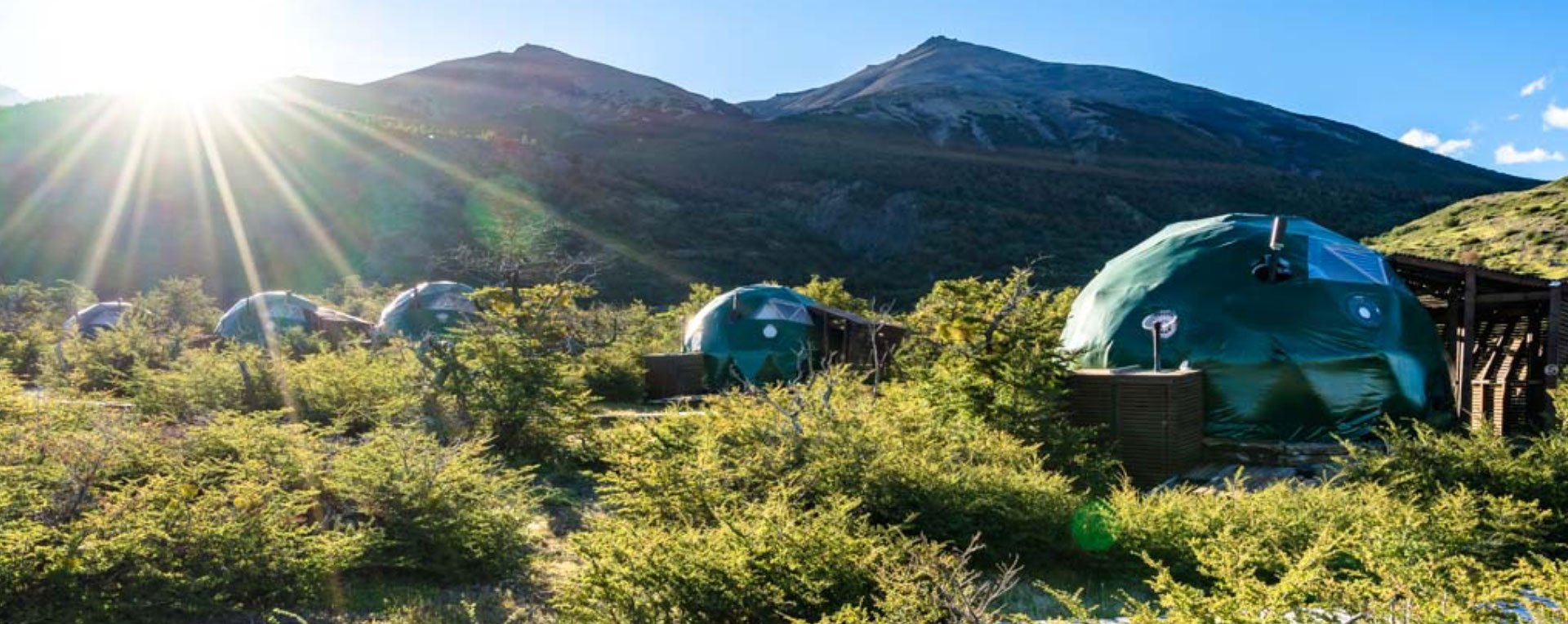

Few landscapes on Earth feel as dramatic and untamed as Patagonia, Chile, where glaciers, windswept plains, and towering granite peaks shape one of the most spectacular wilderness regions on the planet. At the heart of this remote corner of South America lies Torres del Paine, a destination known for its breathtaking mountains and unforgettable trekking routes.
For travelers exploring Torres del Paine National Park, one element that stands out is the park's mountains and peaks, which are the defining features of the park. From the iconic granite towers that give the park its name to the massive Paine Grande and the sharp horns of Los Cuernos, the skyline of this extraordinary Paine Massif draws hikers, photographers, and nature lovers from around the world.
In this article, we will showcase some of the most iconic peaks of the national park, and if you are staying at EcoCamp Patagonia, you will have plenty of opportunities to see many of them.
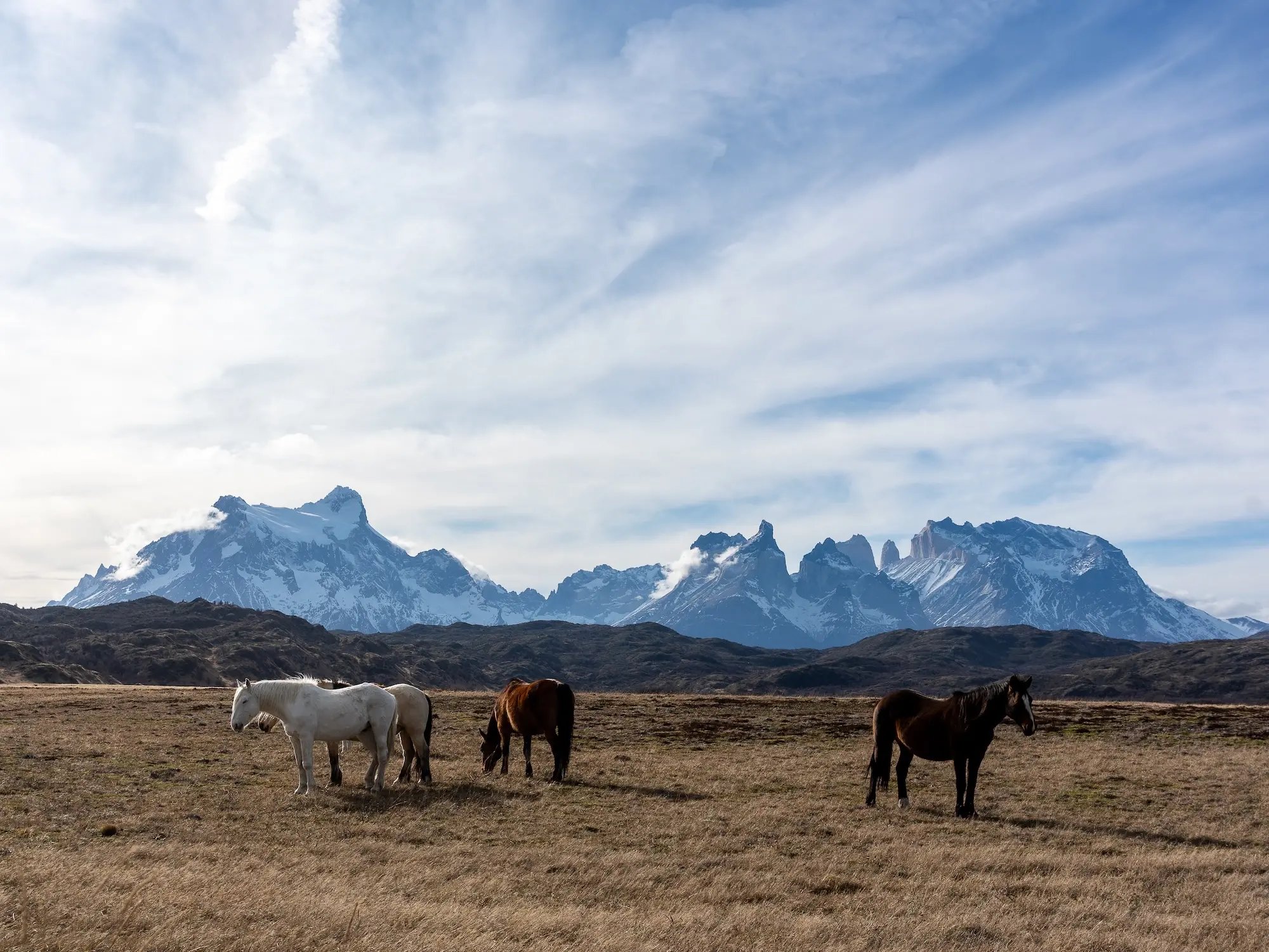
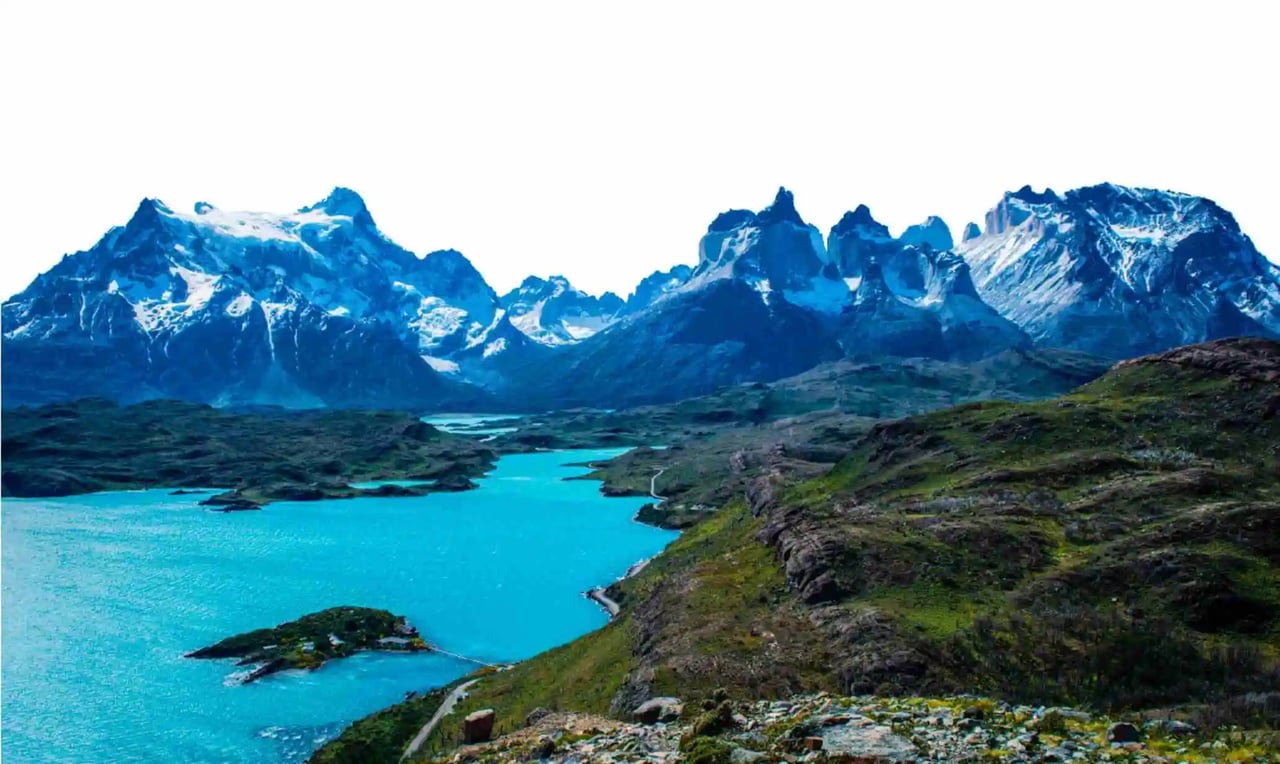
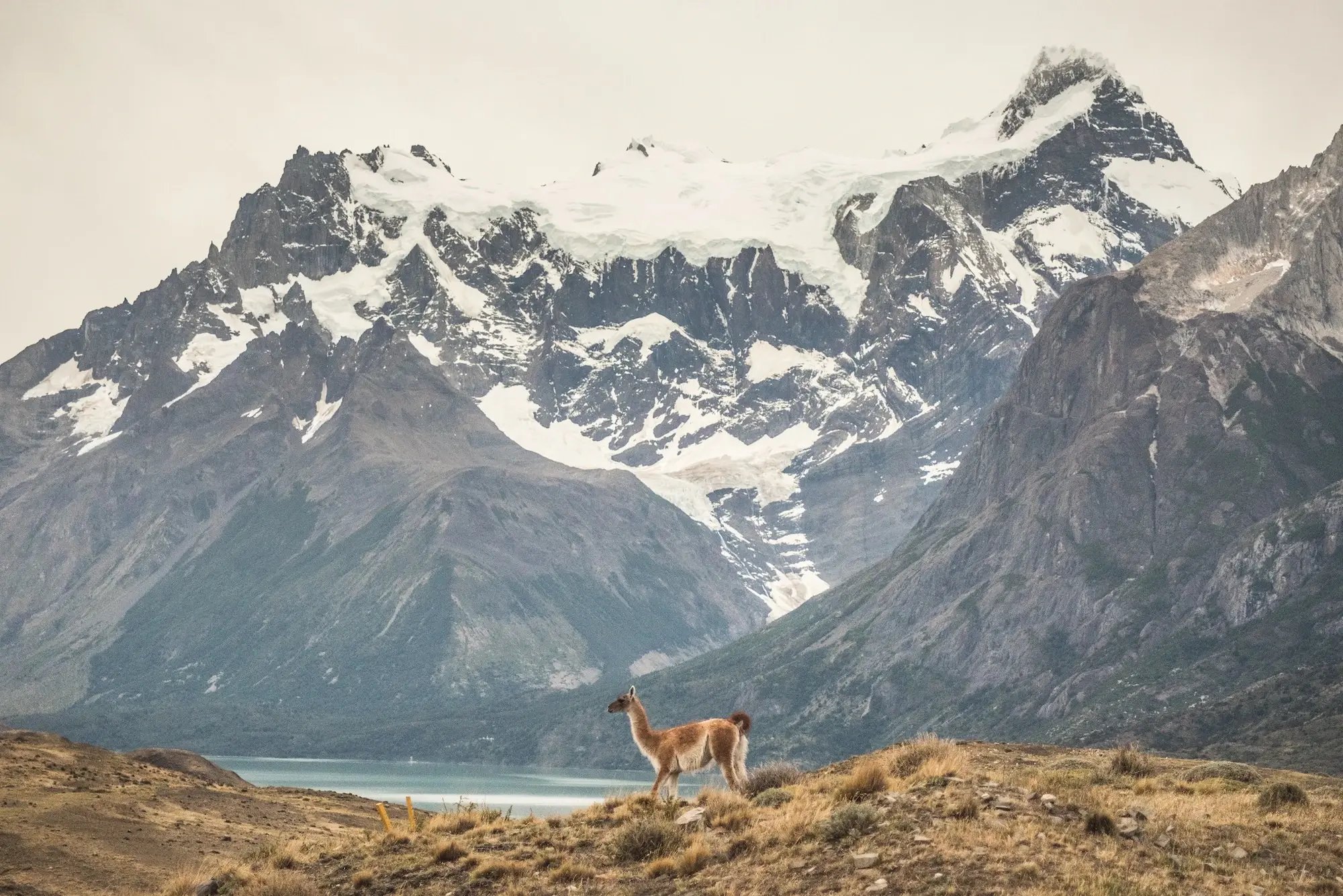
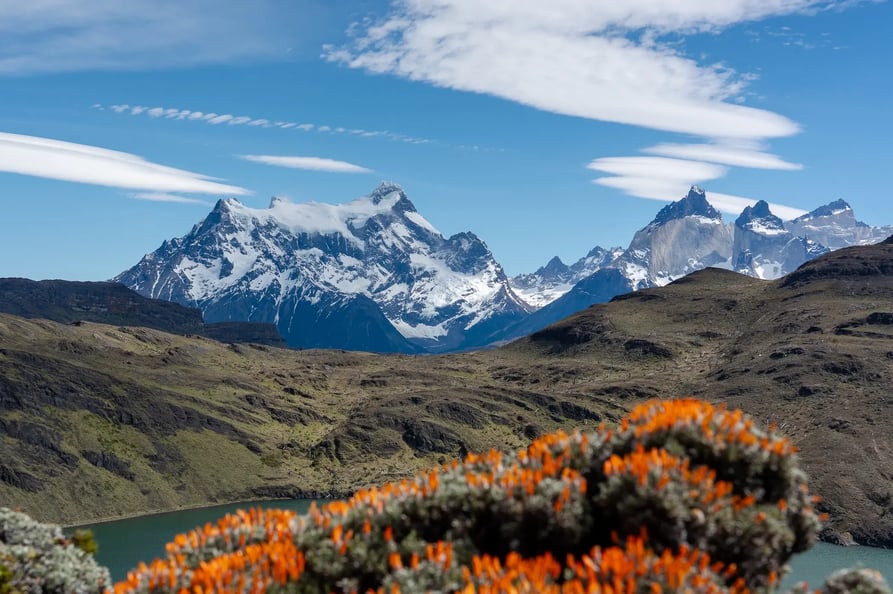
Paine Massif seen from the West side of the National Park. From left to right: Cerro Paine Grande, Los Cuernos, and Cerro Almirante Nieto.
The Iconic Towers of Torres del Paine
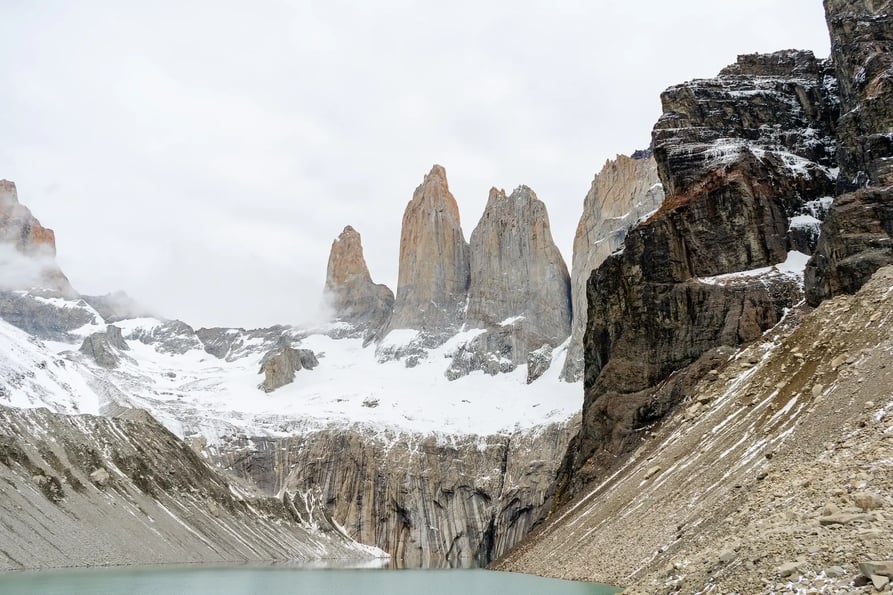
The three granite towers. Known simply as “The Towers,” these vertical granite spires dominate the skyline and are the highlight of many Torres del Paine tours that visit the park.
From left to right, when viewed from the Base Torres viewpoint, the towers are:
-
Torre Sur (South Tower): 2,500 mt /8,202 ft
-
Torre Central (Central Tower): 2,450 mt /8,038 ft 8,038 ft 8,038 ft
-
Torre Norte (North Tower): 2,237 mt /7,339 ft
These spires are composed almost entirely of Patagonian granite, sculpted by glaciers and erosion over millions of years. Their steep walls rise nearly vertically above the surrounding valleys, creating one of the most dramatic alpine formations in South America.
Geological Formation of the Granite Towers
Around 12–13 million years ago, molten rock (magma) rose from deep within the Earth and intruded into older sedimentary rock layers. This magma did not erupt as a volcano. Instead, it cooled slowly underground, forming a large mass of very hard granite. Because granite cools slowly beneath the surface, it forms strong, compact rock that is much more resistant to erosion than the surrounding sedimentary layers.
Over time, tectonic forces and erosion gradually exposed the granite body at the surface.
The Paine Massif is what geologists call a laccolith — a dome-shaped granite intrusion that pushed the overlying rock layers upward. During the Ice Ages (last ~2 million years), massive glaciers covered the region. These glaciers slowly carved away the softer surrounding rock.
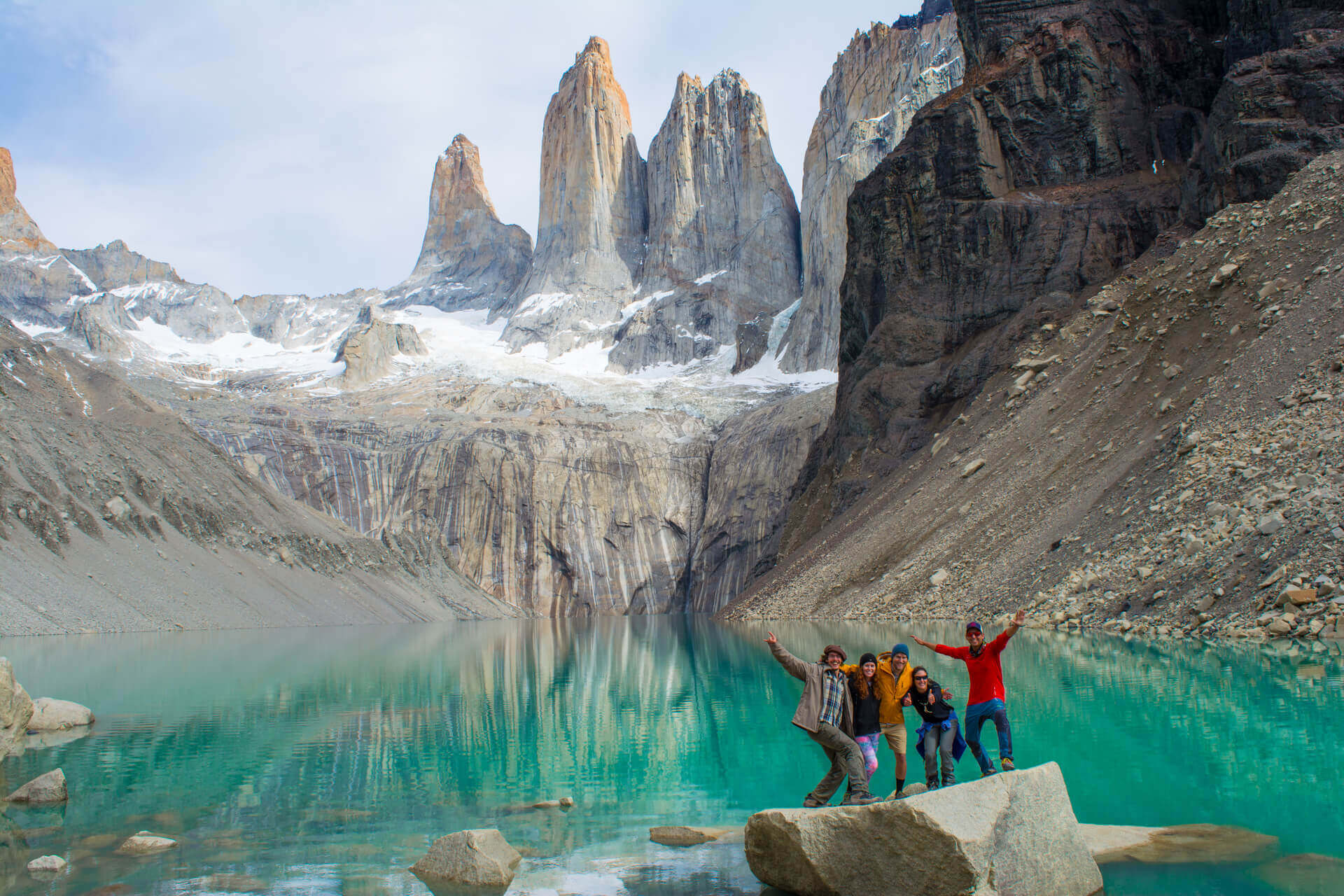
Because the granite of the Torres is extremely resistant, it remained standing while the surrounding rock was eroded away. This glacial erosion is also what created the Base Torres lagoon, the turquoise lake that sits directly beneath the towers. The hike to the base of the towers is one of the most popular experiences in Patagonia, Chile, and is included in many Torres del Paine Full Day itineraries and as a day hike.
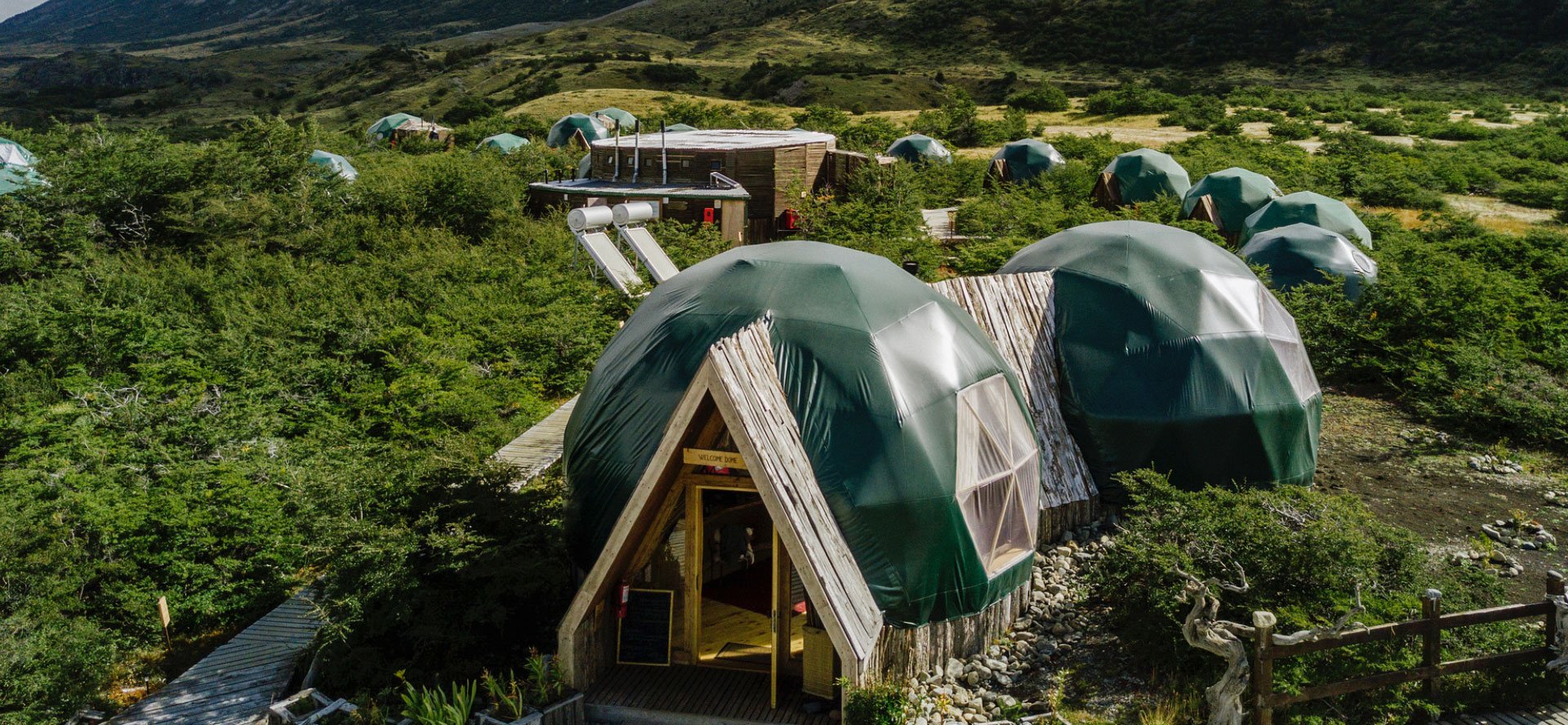
From EcoCamp Patagonia, you will have a world-class view of the towers, as we are located in the same area. As for hotels inside the park, we have the best location for the day hike to reach the towers!
Climbing History
The Torres quickly became legendary among climbers due to their sheer granite walls, the Patagonian weather's instability, and their technical difficulty.
North Tower – 1957: The first ascent of any of the towers was made on December 27, 1957, by an Italian expedition led by Guido Monzino. The team climbed the tower’s east face using traditional alpine techniques.
Central Tower – 1963: The Central Tower was first climbed on January 16, 1963, by British mountaineers Chris Bonington and Don Whillans, who ascended via the north ridge.
South Tower – 1963: Later that same year, the South Tower was climbed for the first time. Considered the most difficult of the three, it was ascended by an Italian expedition led by Armando Aste.
Although the South Tower is the highest, the Central Tower is the most famous among climbers, as it features some of the longest granite big walls in Patagonia, including the legendary route "Riders on the Storm".
Later, local Chilean climbers opened new routes, and back in 2015, 2 Chilean guys and their Argentinean friend climbed all three towers in 3 days! Read more about their amazing journey in this interview we made back then.
Cerro Paine Grande: The tallest Mountain in the Park
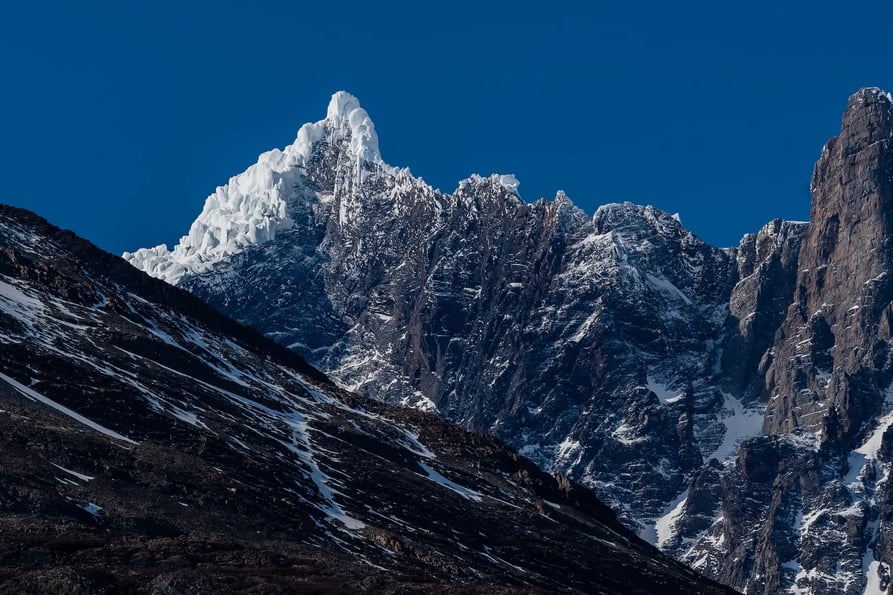
While the towers themselves are the most famous formation, the highest peak in the park is Paine Grande. This mountain reached 2,884 m and dominates the western side of Torres del Paine National Park, rising dramatically above Lake Grey, Lake Pehoé, and the French Valley. On the Glacier Grey boat ride, you will see the Paine Grande mountain while passing icebergs, approaching the glacier.
The mountain is particularly striking because of the large hanging glaciers that feed into the surrounding valleys and the steep granite and metamorphic rock faces typical of the Paine massif.
The four main summits recognized by climbers are Cumbre Principal, the highest point at 2,884 m (9,462 ft), followed by Punta Central at approximately 2,750 m (9,022 ft), Punta Bariloche (Cumbre Sur) at around 2,730 m (8,957 ft), and Punta de los Cuatro Vientos at about 2,600 m (8,530 ft). These summits are connected by long ridges of rock, snow, and ice, forming a dramatic and technical alpine landscape at the heart of Torres del Paine.
Mountaineering, reaching the hardest summit of the Paine Massif
This mountain has been climbed only a few times in history. The first successful ascent was made in 1957 by an Italian expedition led by Guido Monzino.
That same spring, the Club Andino Bariloche organized its fourth expedition to the Paine Massif. Shortly before departure, they received a letter from Punta Arenas stating that local authorities—following orders from the Chilean Foreign Ministry—had banned them from attempting the mountain. The entire Paine Massif had been reserved for the Italian expedition led by Monzino.
Although the summit is not extremely high compared to other technical mountains, the harsh Patagonian weather makes climbing it particularly challenging. In April 2024, our Data Analyst, Víctor Zavala, became one of the few climbers to reach the summit of this iconic peak.
Paine Grande is a central landmark along the renowned W Trek, one of the world's most famous hiking routes. Travelers joining the Torres del Paine W Trek will catch a view of this impressive mountain while hiking on the West side of the W trek, and when venturing into French Valley.
The mountain’s dramatic profile makes it a favorite subject for photographers exploring hotels in patagonia chile and adventure travelers seeking the best trekking routes in patagonia south america.
The best places to see Paine Grande are the Pehoe Lake area and the Grey Lake/ Grey Glacier area.
Los Cuernos: The Horns of Patagonia
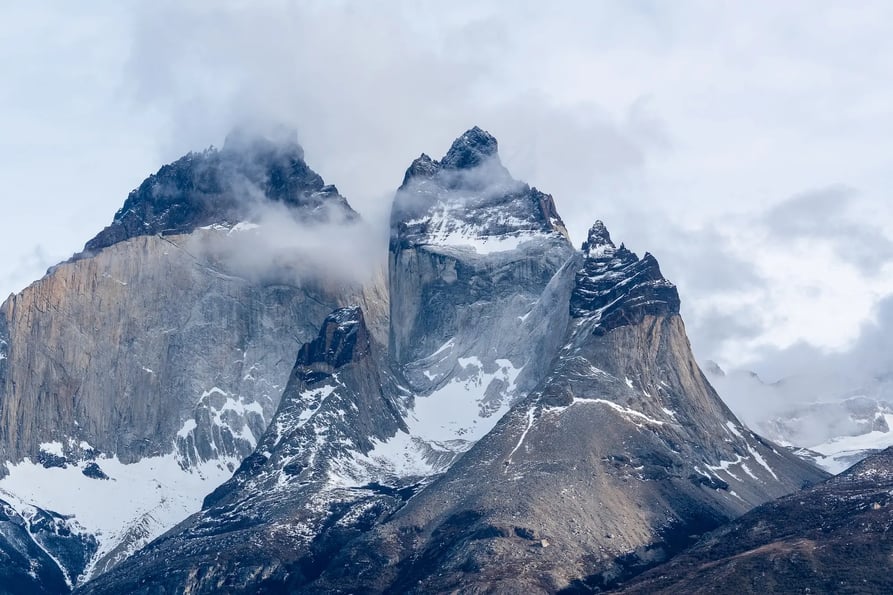
Another striking mountain formation in the park is Los Cuernos del Paine, known as “The Horns.” These distinctive peaks rise sharply above the shores of Lake Nordenskjöld and are easily recognizable thanks to their layered rock colors.
The Horns have 3 summits:
-
Cuerno Principal (Main Horn): 2,450 mt/ 8,038 ft
-
Cuerno Este (East Horn): 2,000 mt/ 6,561 ft
-
Cuerno Norte (North Horn): 2,200 mt/ 7,217 ft
Geological Formation of The Horns
The Cuernos are famous for their two-tone rock layers. The dark upper rock is a hard granite intrusion.
The lighter lower layers are older sedimentary rock. Glaciers and erosion sculpted the mountain over millions of years, leaving the striking “horn” shape that gives it its name.
Their dark granite caps and lighter sedimentary bases create one of the most visually striking landscapes in Torres del Paine National Park.
It has three summits: Cuerno Norte, Cuerno Principal, and Cuerno Este.
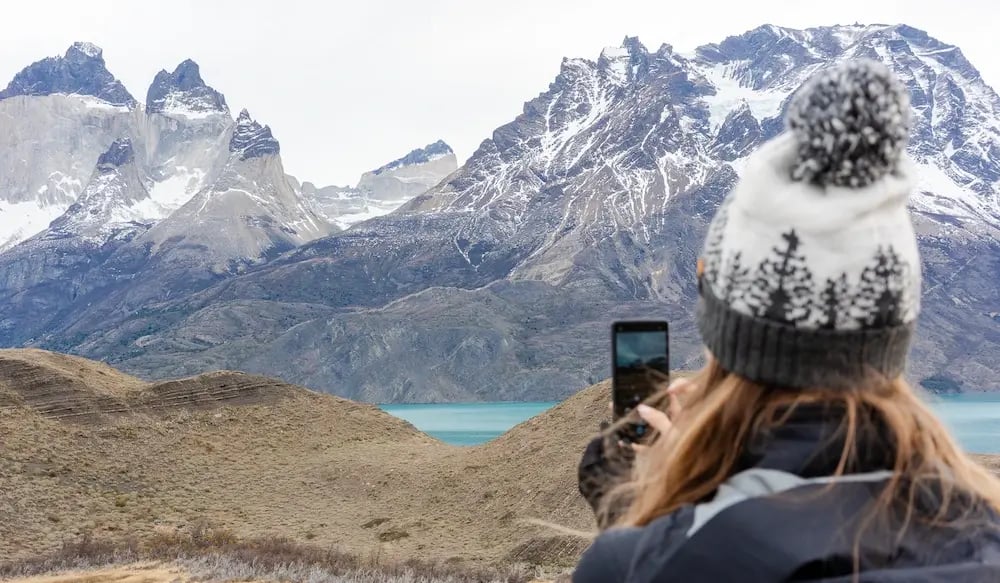
If you want to visit or approach the Horns, there are various ways. From the main road inside the national park, there are several viewpoints, including Mirador Lago Nordenskjöld, one of the most impressive. From the viewpoint at Salto Grande, you can hike to the Cuernos lookout, a 6.4 km out-and-back (~4 mi). We include this hike in our Wildlife Safari program on Sundays.
Another viewpoint is along the W hike, walking from EcoCamp towards Refugios Cuernos. Some 11 km (6.8 mi) into the trail, you get to a viewpoint, where you will have the rising just in front of you. We also offer this hike in our Wildlife Safari program, and if you do the W or Paine Circuit, you will get to this viewpoint as well.
First ascents of Los Cuernos
Cuerno Central (1968): This was the first major climbing milestone in the massif, achieved by Chilean mountaineers during the summer of 1968.
Cuerno Este (2022): The first ascent of this summit was completed in January 2022 by Sebastián Pelletti, Romano Marcotti, and Pepo Jurado via the route “Vacaciones Metamórficas.”
Cuerno Principal: In recent years, new routes have been established on this peak, including in 2026, further confirming the massif as an important destination for technical climbing.
Cerro Almirante Nieto
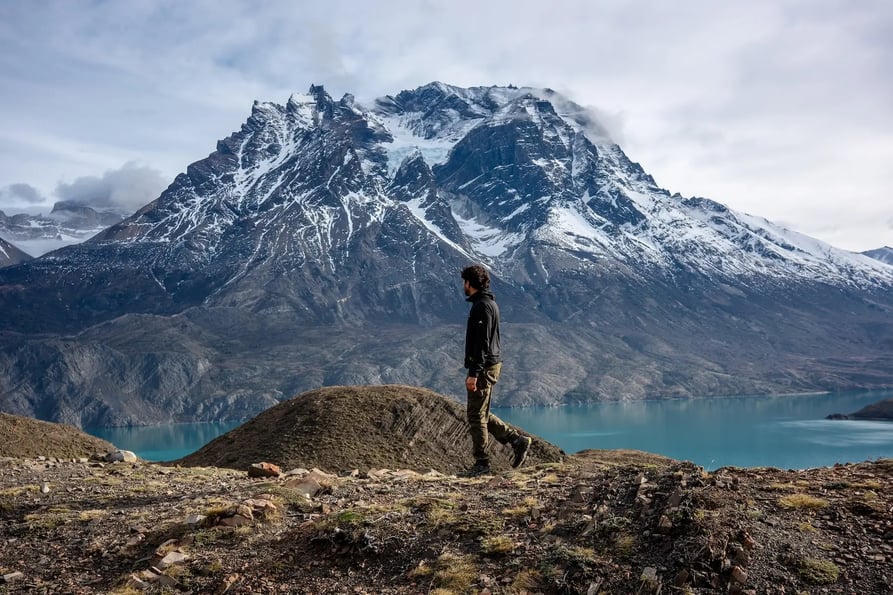
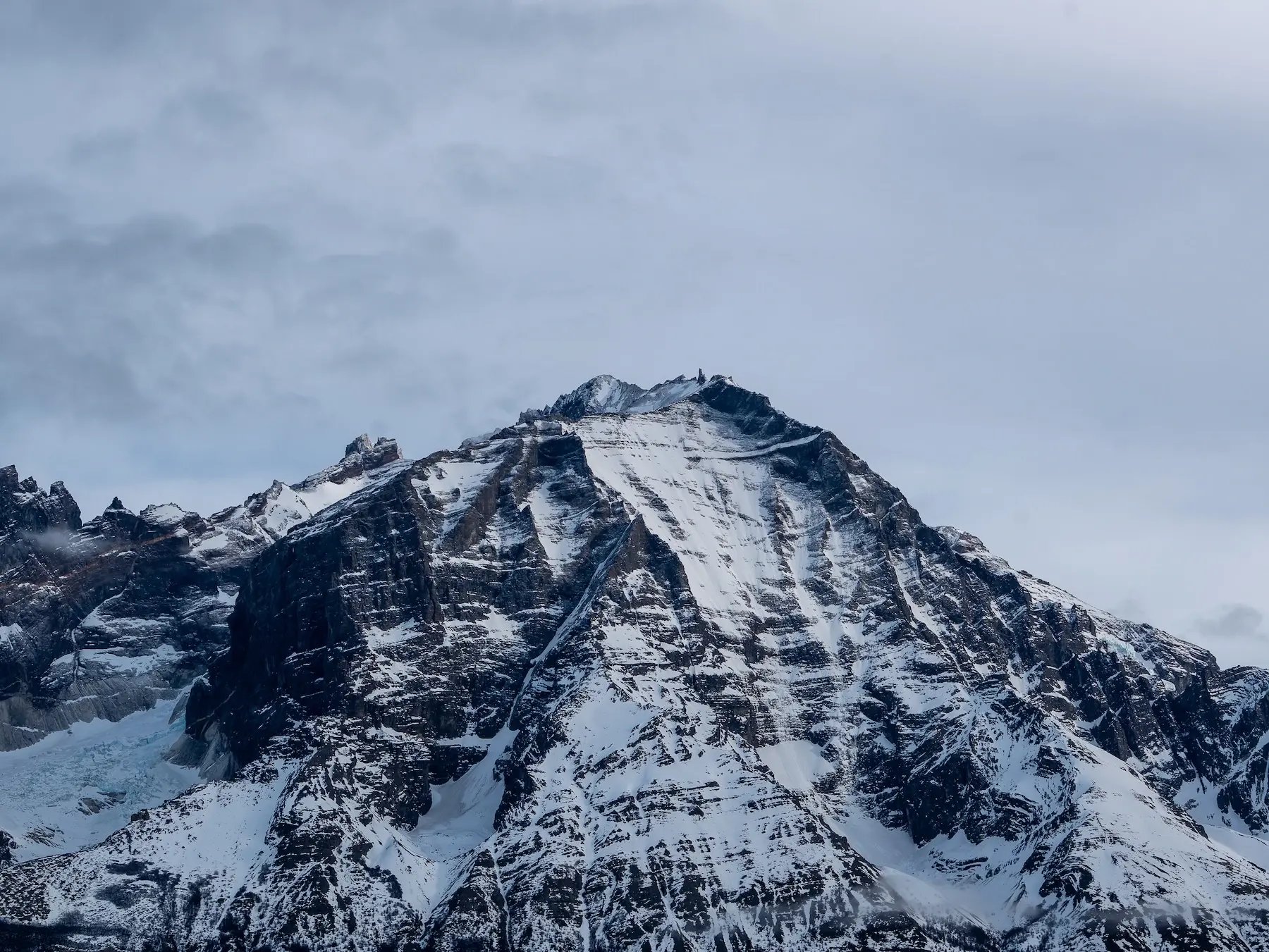
Cerro Almirante Nieto is one of the highest and most imposing mountains in the Torres del Paine National Park, with an elevation of 2,640 mt (8,660 ft). It forms the eastern wall of the Paine Massif and towers directly above the famous Base Torres Viewpoint. From EcoCamp Patagonia, you have a great view of this beautiful mountain.
The mountain is named after Juan José Latorre Benavente, a Chilean naval officer. The name “Almirante Nieto” honors the maritime history connected with the exploration of southern Patagonia.
This is one of the easier mountains to climb in a couple of days, but it requires professional climbing equipment, as there is some technical climbing to pass a glacier.
Explore Torres del Paine with EcoCamp Patagonia
Among the hotels in Torres del Paine National Park, EcoCamp is recognized for its sustainability, comfort, and immersive wilderness experience. It is frequently ranked among the best hotels in Torres del Paine and offers one of the most memorable lodging experiences in the region.
Among Torres del Paine National Park hotels, EcoCamp is recognized for its sustainability, comfort, and immersive wilderness experience. It is frequently listed among the best hotels in Torres del Paine and offers one of the most memorable Torres del Paine lodging experiences in the region.
We offer various adventurous programs, from our Epic Patagonia Multi-Activity Adventure, which combines trekking, biking, horseback riding, and kayaking, to our Puma Tracking Program for true wildlife enthusiasts and photographers.
How to Get to Torres del Paine
Travelers planning a visit often ask how to get to Torres del Paine or how to get to Patagonia, South America. Most international visitors arrive via Santiago, Chile, before flying south to Punta Arenas or Puerto Natales.
From there, transfers lead travelers into the park itself, where the dramatic mountains of Patagonia Torres del Paine rise above the steppe landscape.
Because the park is remote, many visitors choose Patagonia vacation packages that combine transportation, guides, and accommodation in Torres del Paine. At EcoCamp Patagonia, we offer various outdoor packages that include logistics from Punta Arenas, Puerto Natales, or El Calafate (Argentina).
Looking for vacation packages in Torres del Paine, and do you want to see these peaks with your own eyes?