




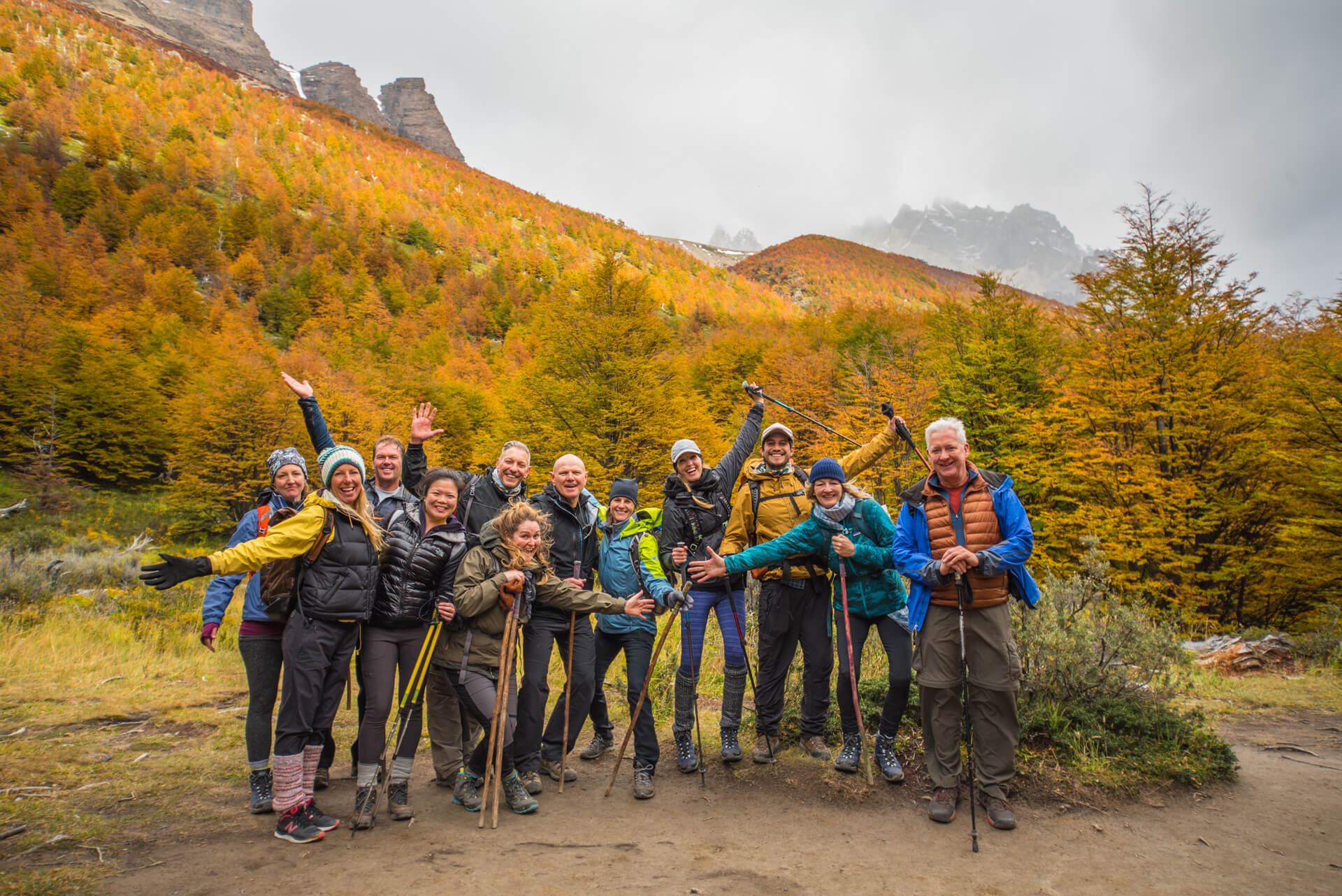



I have to admit, I was prepared for the worst weather conditions for this hike. I had heard so many stories about how rainy that area is, so I was mentally prepared for 2 days of rain, wind, mud, and river crossings. I bought some good waterproof pants, but my rain jacket would only survive half an hour. My half-mountain trekking boots can withstand a lot of water before getting wet, so I trusted they would keep me dry for a couple of hours with dry socks, unless I had to step into deep water. Cascada Expediciones provided us with gaiters. Gaiters help you get through mud and keep you dry in some areas, depending on water depth.
Venturing into true wilderness
I did the Brush Variant with Cascada Expediciones, a program we introduced 2 years ago for those who seek remoteness and wilderness, before entering the W trek. I only did the Brush Variant, as I have already done the W trek programs, and my purpose was to understand well how the variant is, and to take photos, as there have been some changes to some of the places since the first time we did it with guests (better overnight stays).
My name is Nana, and I work as Content Creator and Community Manager for Cascada Expediciones and EcoCamp. This is my experience sailing on the Last Hope Sound, and hiking from the Bernardo O´Higgins National Park towards Serrano village on the east side of Torres del Paine National Park.
I know many parts of the national park, Torres del Paine, and I have done some horseback riding in the Serrano area, plus, years back, I did the Balmaceda and Serrano glacier boat ride - so I knew part of the area, but not the hike between Serrano Glacier towards the Brush Lake, and from there to the Serrano Village. So I was also very excited to explore a new corner of this place I call home.
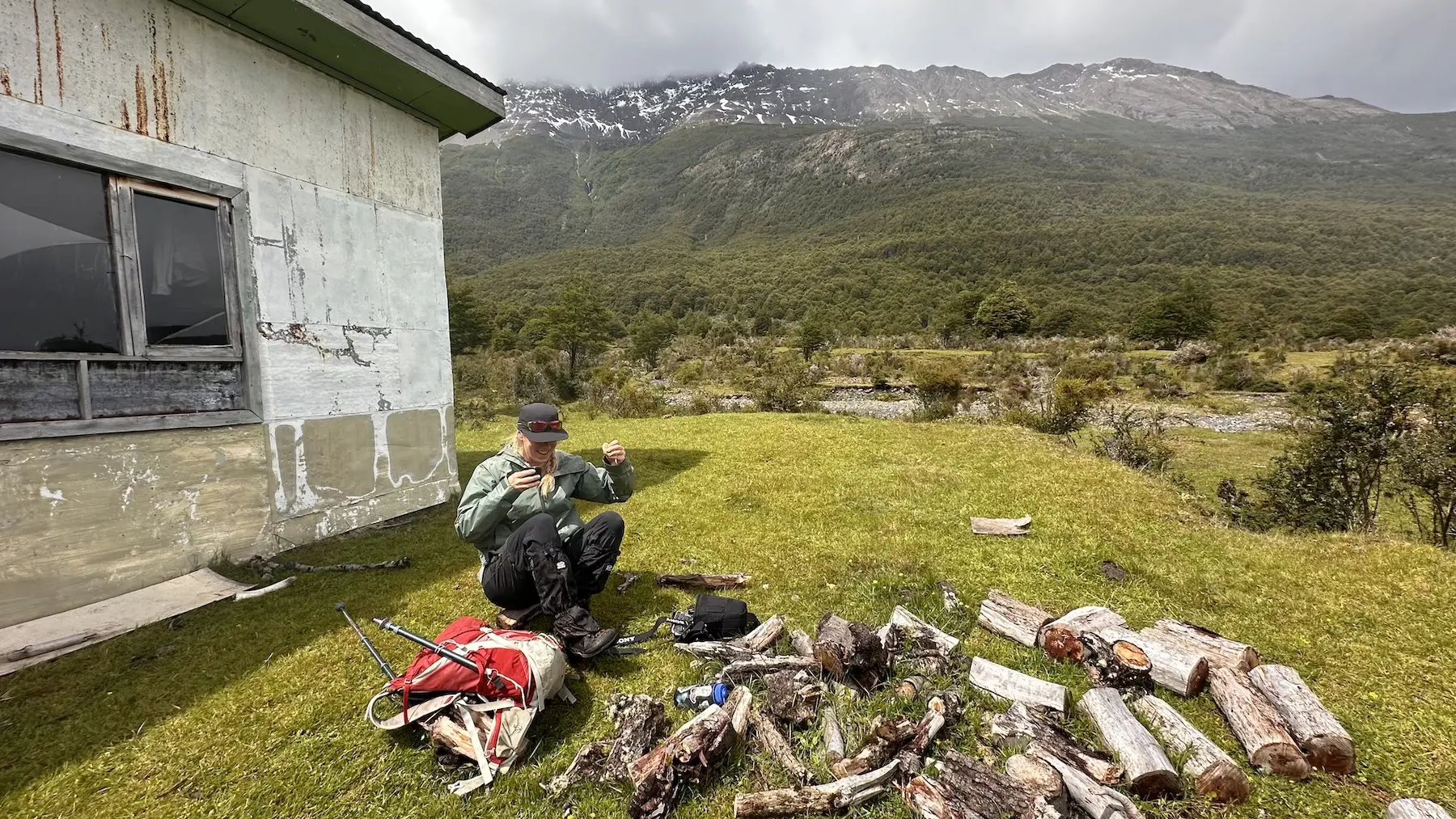
As the one holding the camera, creating content, I am not usually in the pictures. This was the only one I found, from day 1, having a rest and a warm cup of tea at an old, abandoned gaucho hut.
Day 1: Balmaceda and Serrano Glacier boat ride
I did the excursion with a couple from Scotland/England and the experienced guide Mauricio, who leads most of the W trek + Brush Variant programs. The day before, on Christmas Day, we met at a hotel in Puerto Natales, and Mauricio explained the itinerary, what to expect, and how the drybag-and-porter system works.
He passed us the dry bag for the first 2 days, so we could pack it and have it ready for the next morning, as the driver had to pass it on to the porter, while we would be riding a boat to visit the glaciers Balmaceda and Serrano, 2 glaciers close to Puerto Natales.
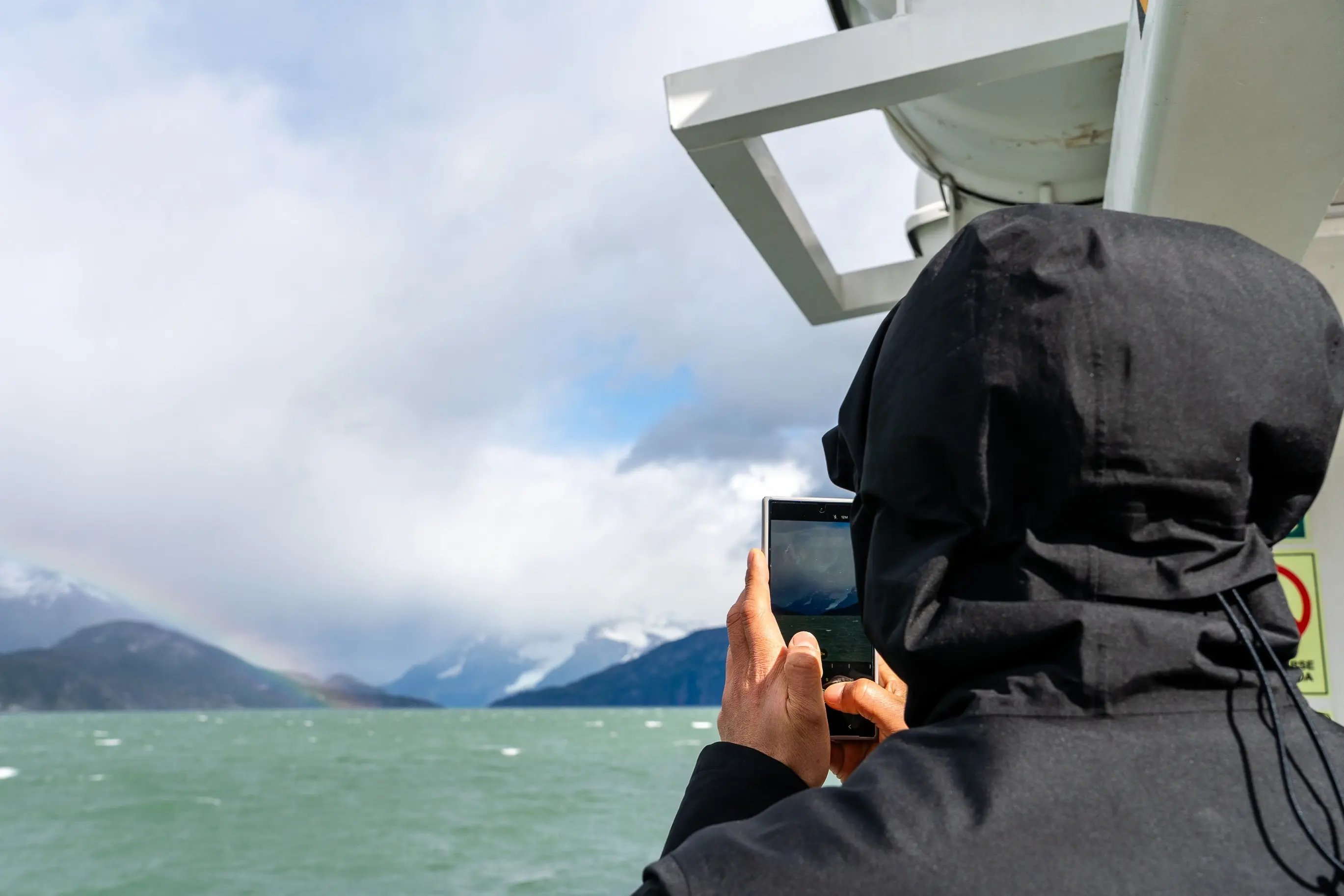
Approaching the Balmaceda Glacier from the boat
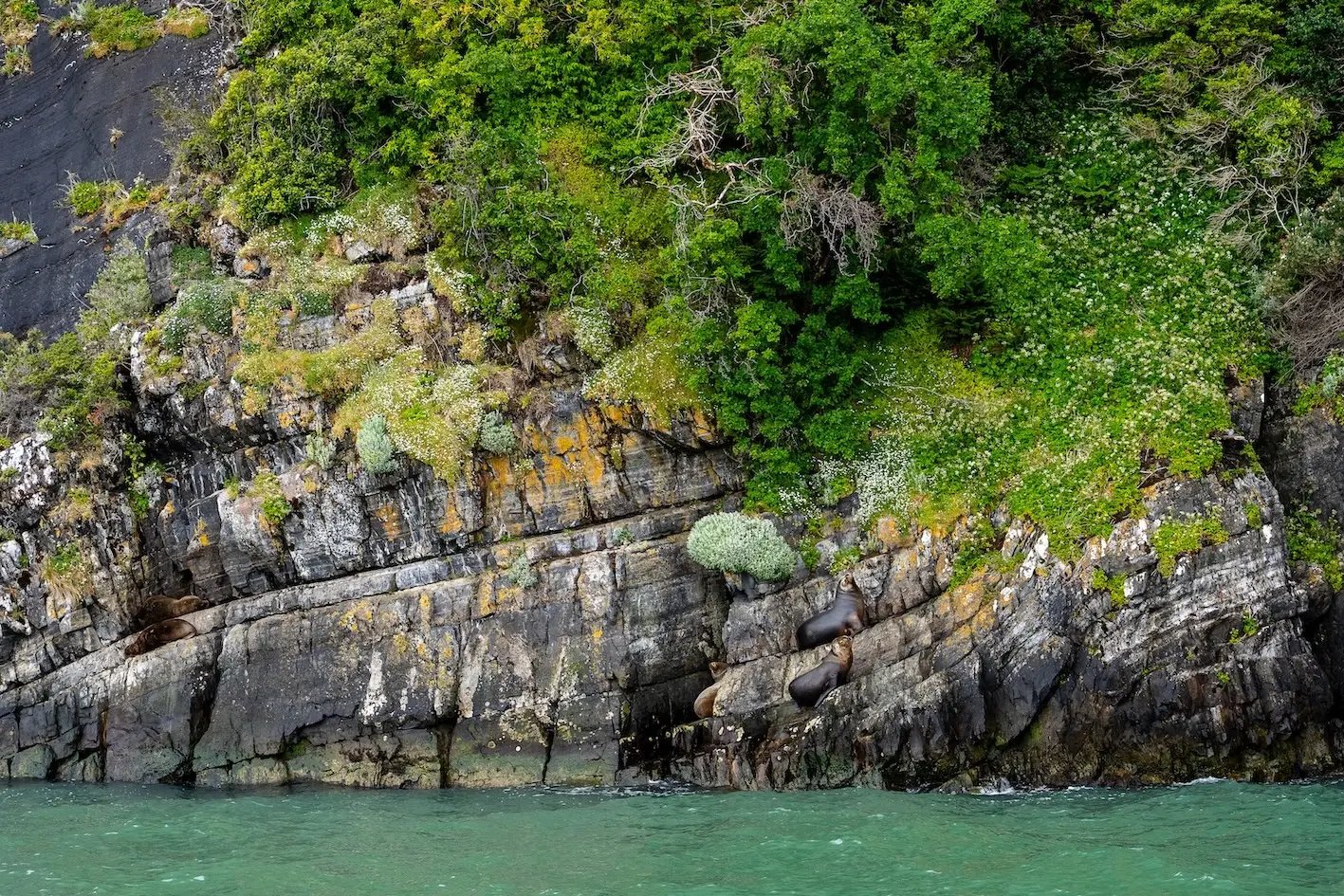
I did this boat ride years ago, and I was happy to do it again. It was raining lightly, but nothing too crazy. It was fine to stand outside now and then, and the sky looked very dramatic, with sunlight piercing the clouds. We passed by the Cormorant colony, and then a small sea lion colony, before reaching the hanging glacier, Balmaceda. Then we continued to Puerto Toro, where we would get off the boat to visit the Serrano Glacier, a 20-minute walk to approach it on foot. It was in December, so everything was very green, and there were a lot of flowers blooming, which I really appreciate about summertime.
Then we went back on the boat, and because of favorable weather, the captain was able to drop us off at the beginning of the Brush Trail, just a 3-minute boat ride from the Toro Pier. When the wind is strong, they sometimes get you there by a Zodiac boat.
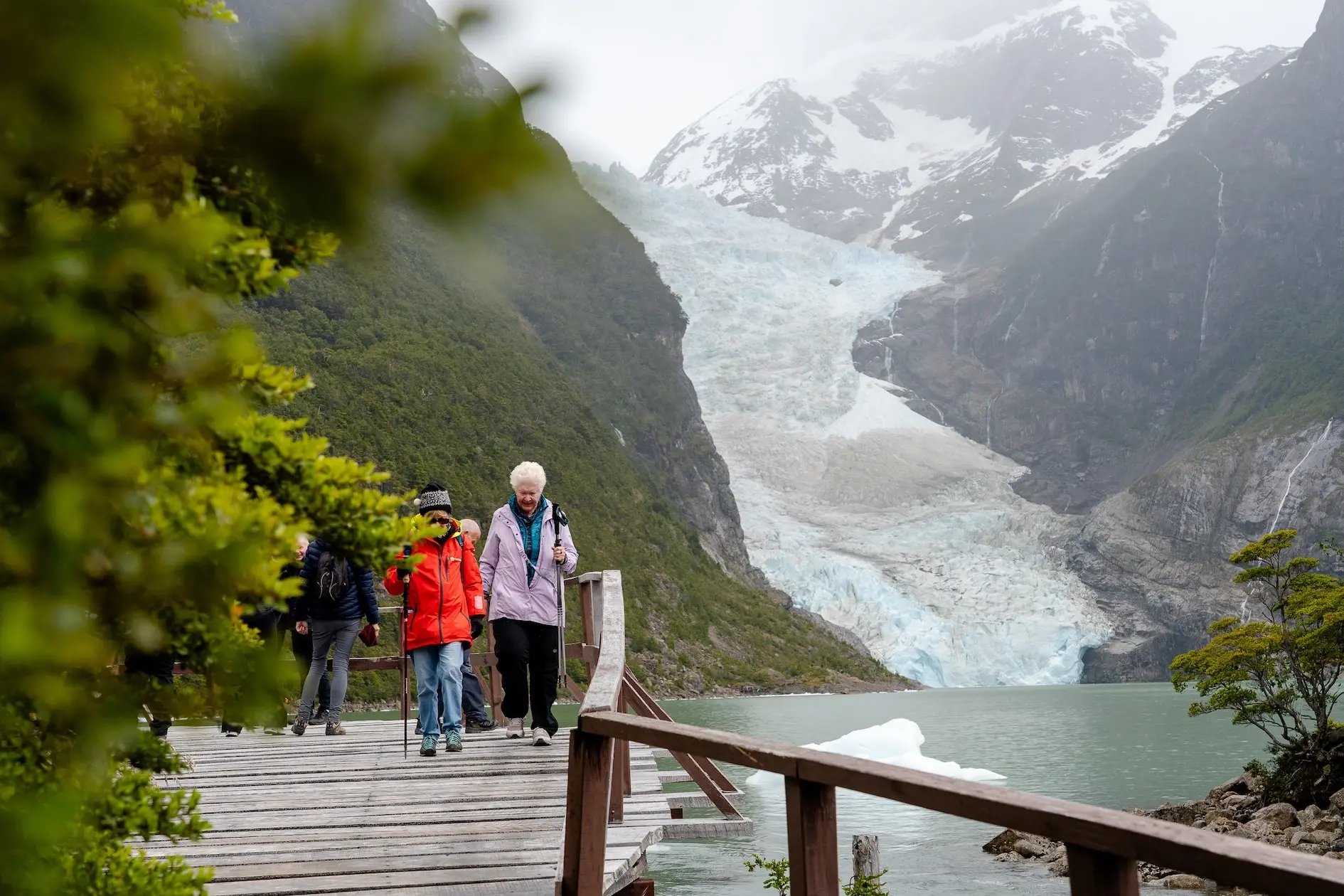
Serrano Glacier, a short hike from the pier, makes you approach this beautiful hanging glacier
Evergreen forest and muddy terrain
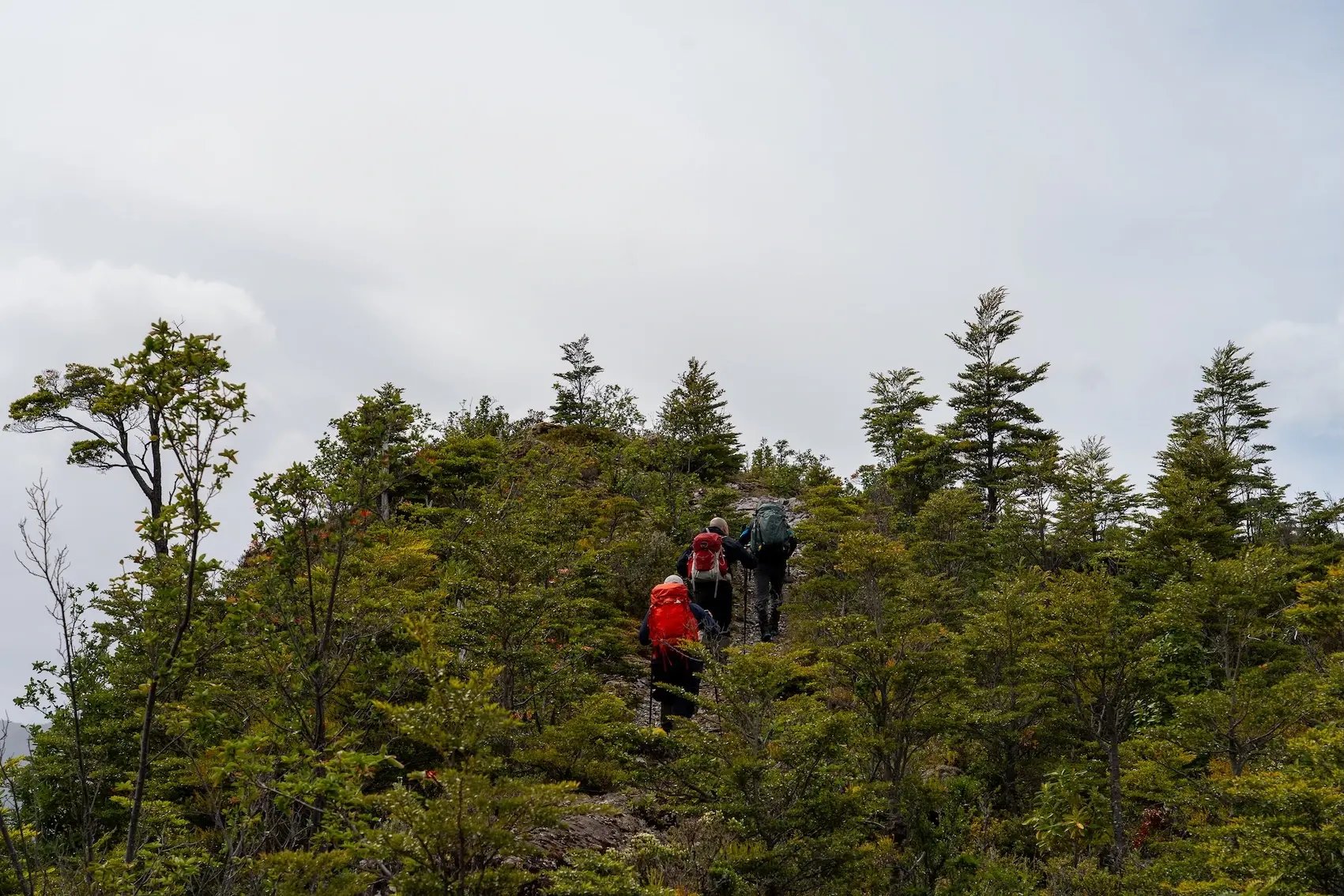
On firm ground, we put on gaiters and sunscreen and got ready to start the hike. In short, today´s hike was challenging, not physically, but due to its terrain: a lot of mud, branches, low trees, peat bogs, and tree roots. At first, you try to avoid stepping into the mud and water, but after a while, you give up and start walking right through. This is also the safest: if you try to avoid the mud and water, you increase the risk of falling and twisting a leg.
So just give in to nature, because here, you are far away from anything that might happen. Also, it will take a longer time and be more exhausting if you try to avoid getting your shoes wet
(spoiler: they will eventually get wet).
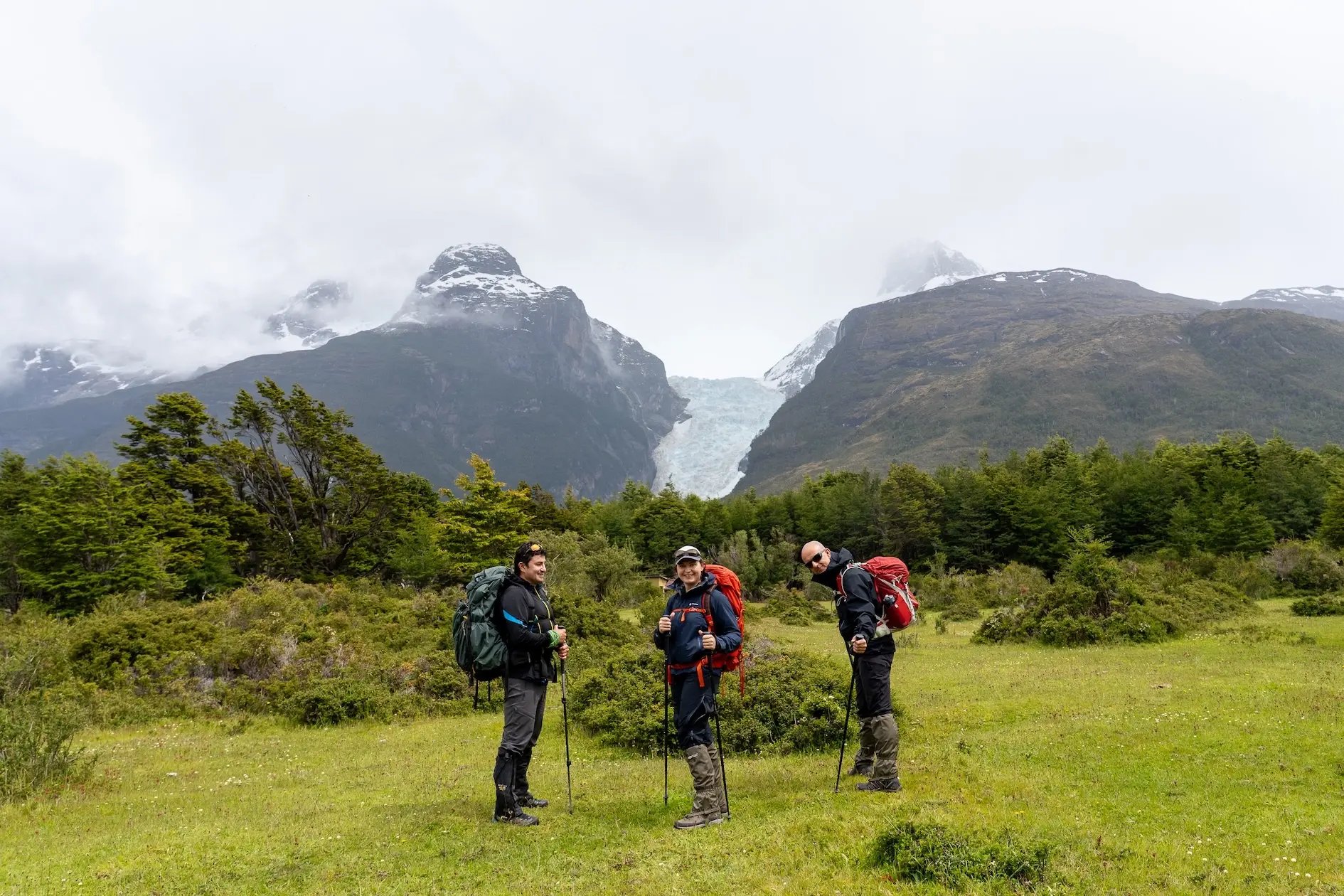
Start of the hike, day 1! The Serrano Glacier in the background
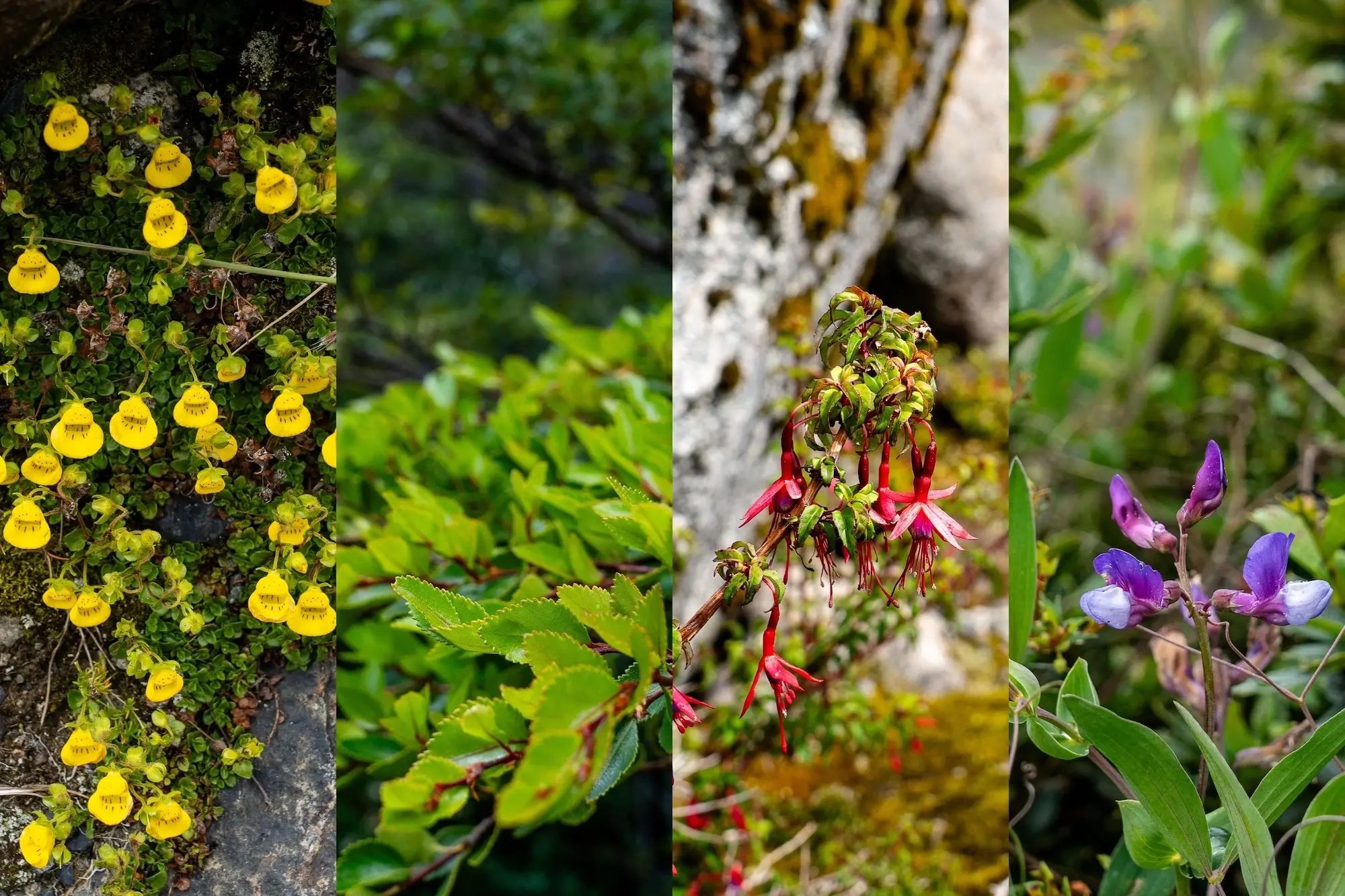
This area is very green thanks to its colder, wetter weather, and we would be walking along the Serrano River most of the time. As we ascended, we could see the river from a distance. I was very impressed by how untouched nature was here, with so many trees I do not usually see in Torres del Paine, and flowers that adapt to this kind of environment.
I measured approximately 13 km, and with 1 break for snacks and tea, we took about 6 hours and 40 minutes to get to Brush Lake, where a boat was waiting for us. A 10-minute boat ride took us to the feet of the hill where our first campsite was located, the Brush Campsite. First, we had to hike uphill some 200 meters before finally reaching the camp.
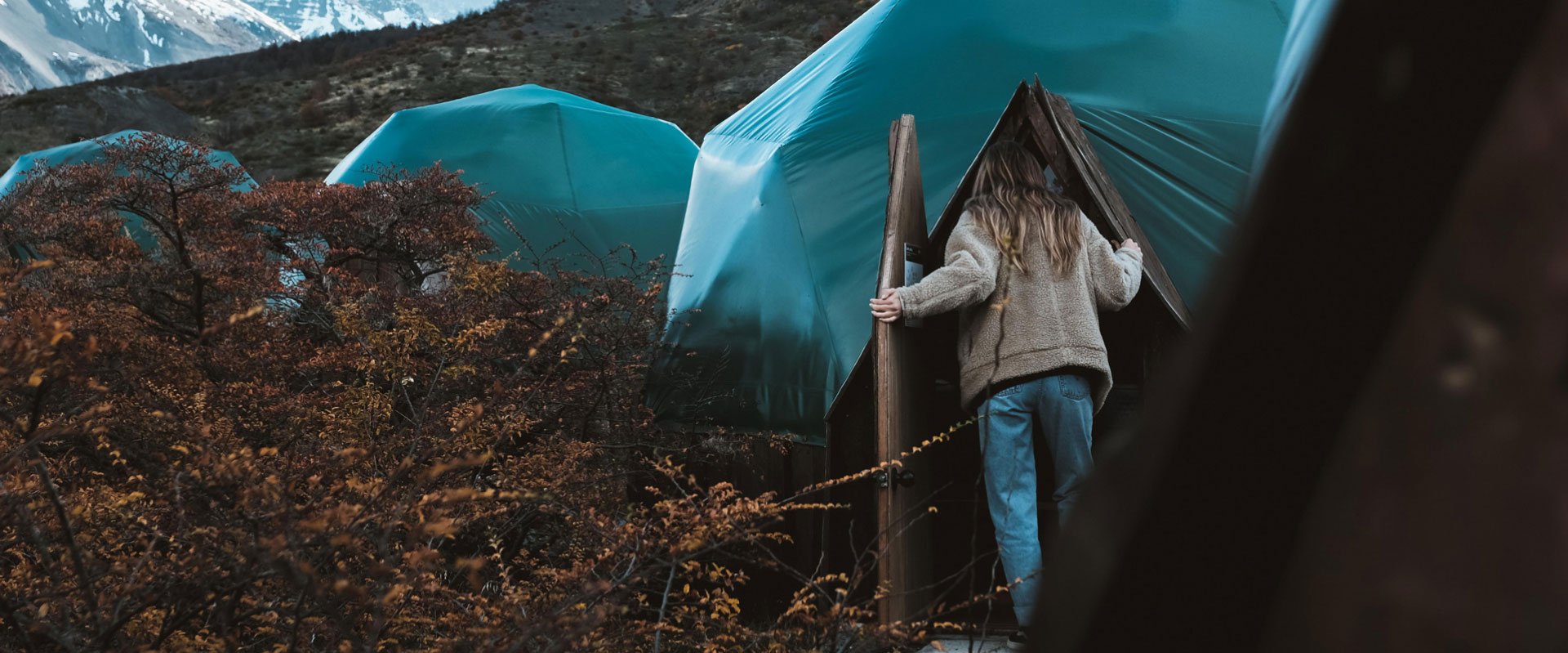
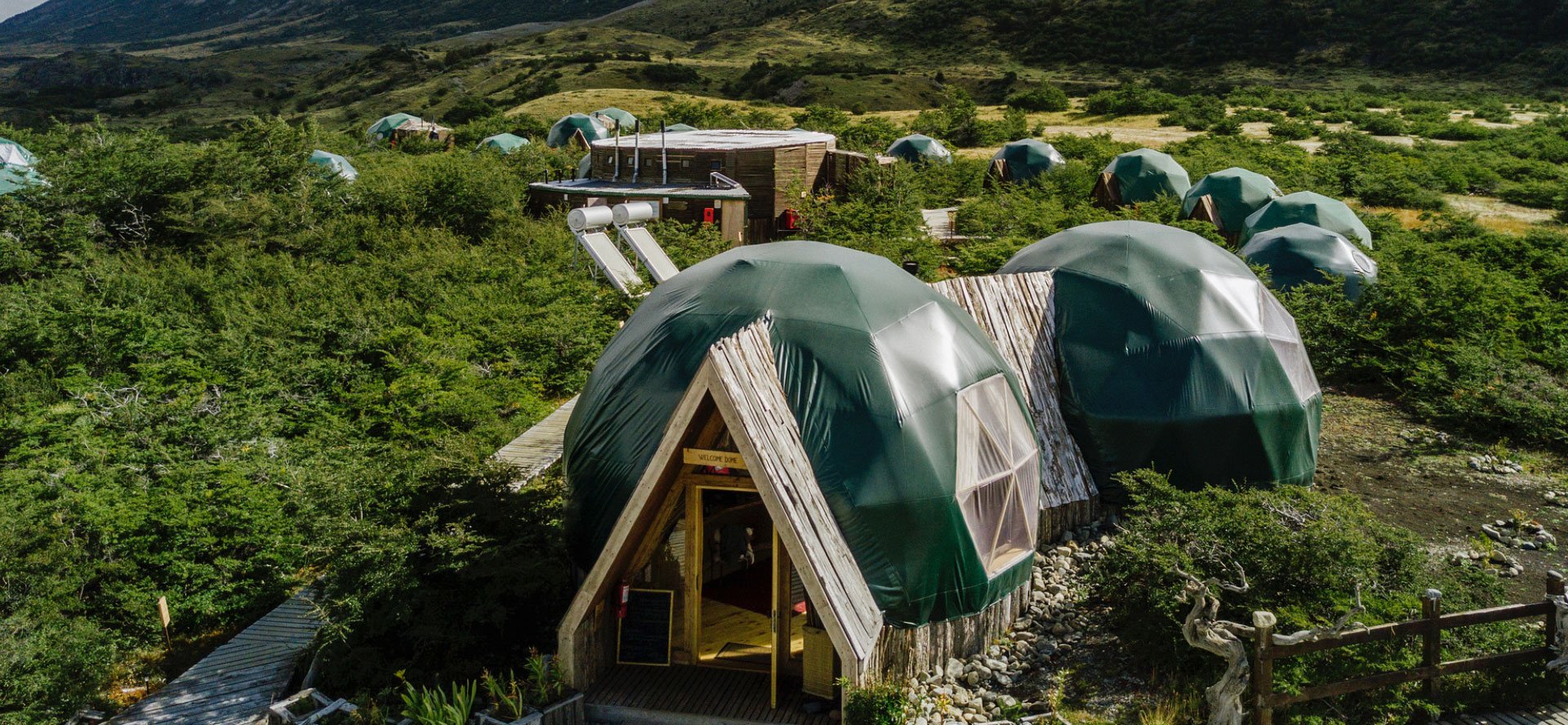
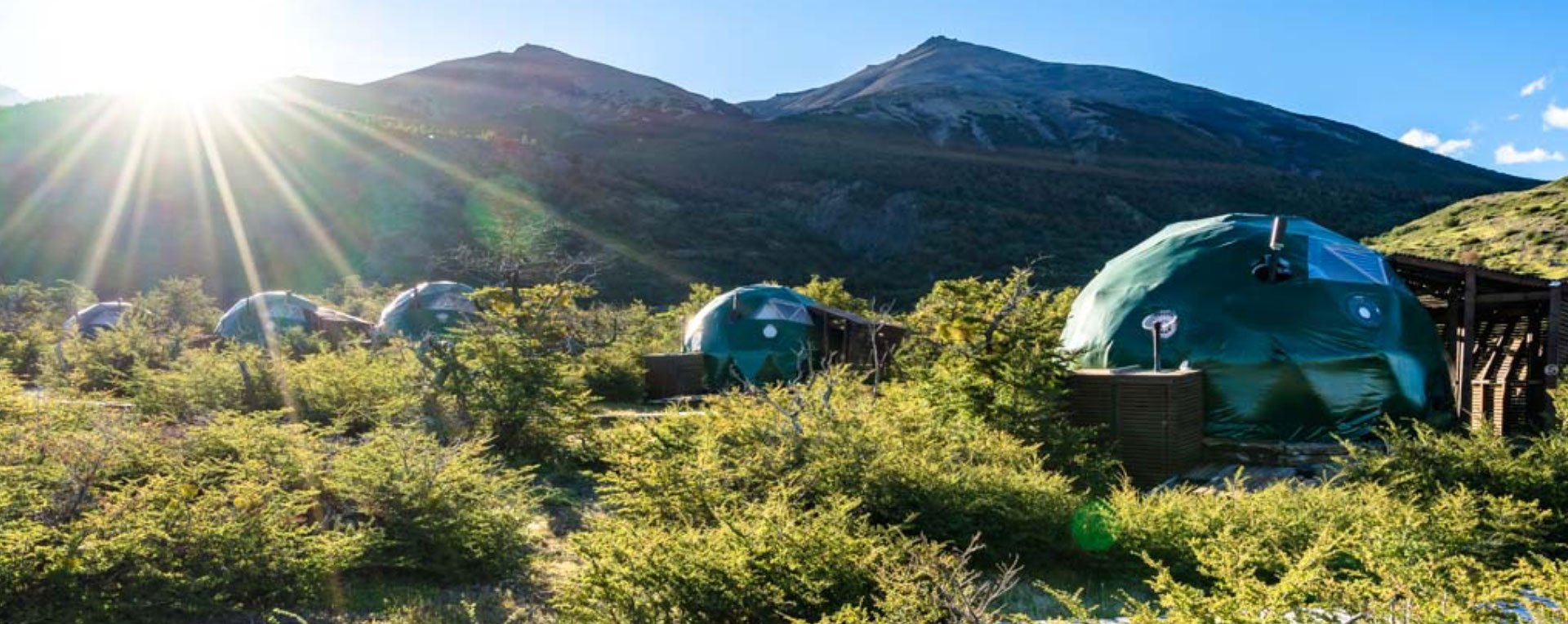
The camp is completely hidden from the outside world, in the middle of the forest. There are various triangle huts, a toilet area, and one big dome with a fireplace - this is where we would have our meals and dry our shoes. There are showers, but only cold water.
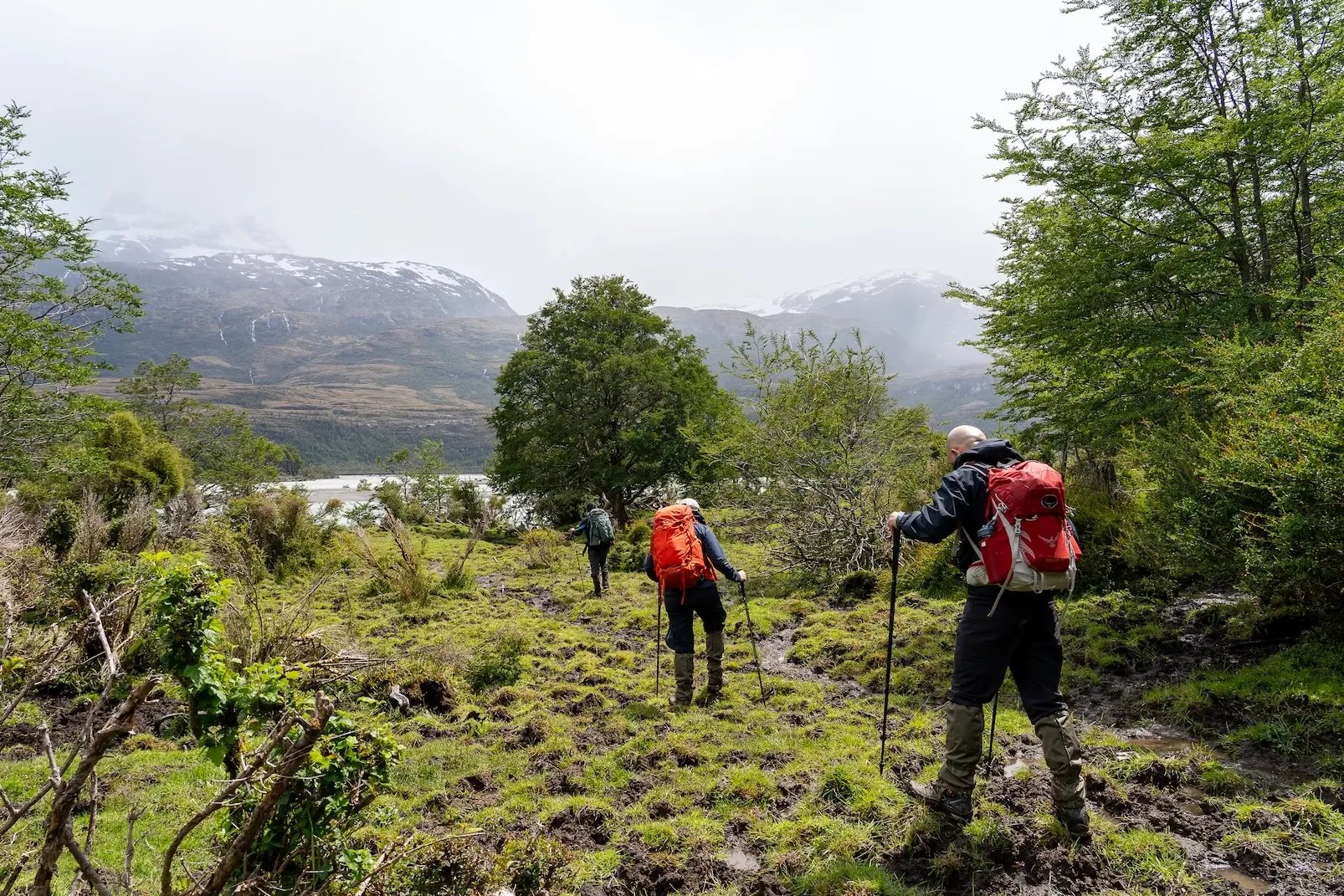
We had had some rainy days before the hike, so according to our guide, the terrain was more muddy than the last time he did the hike. The gaiters helped keep mud out of the shoes.
At the campsite, we met our porter, who was also our chef. He has to carry all our stuff plus the food, so what he can bring is limited by the weight limit each porter can carry. Nevertheless, we had a bottle of wine to share, a delicious warm meal, and a simple mountain dessert (condensed pear with cream).
After dinner, we went to sleep in our triangular house. A very simple bed, but with a warm sleeping back. I didn’t feel cold at all. We also had a liner to put inside the sleeping bag. Tip: Bring a headlamp as there is no light inside the triangular house.
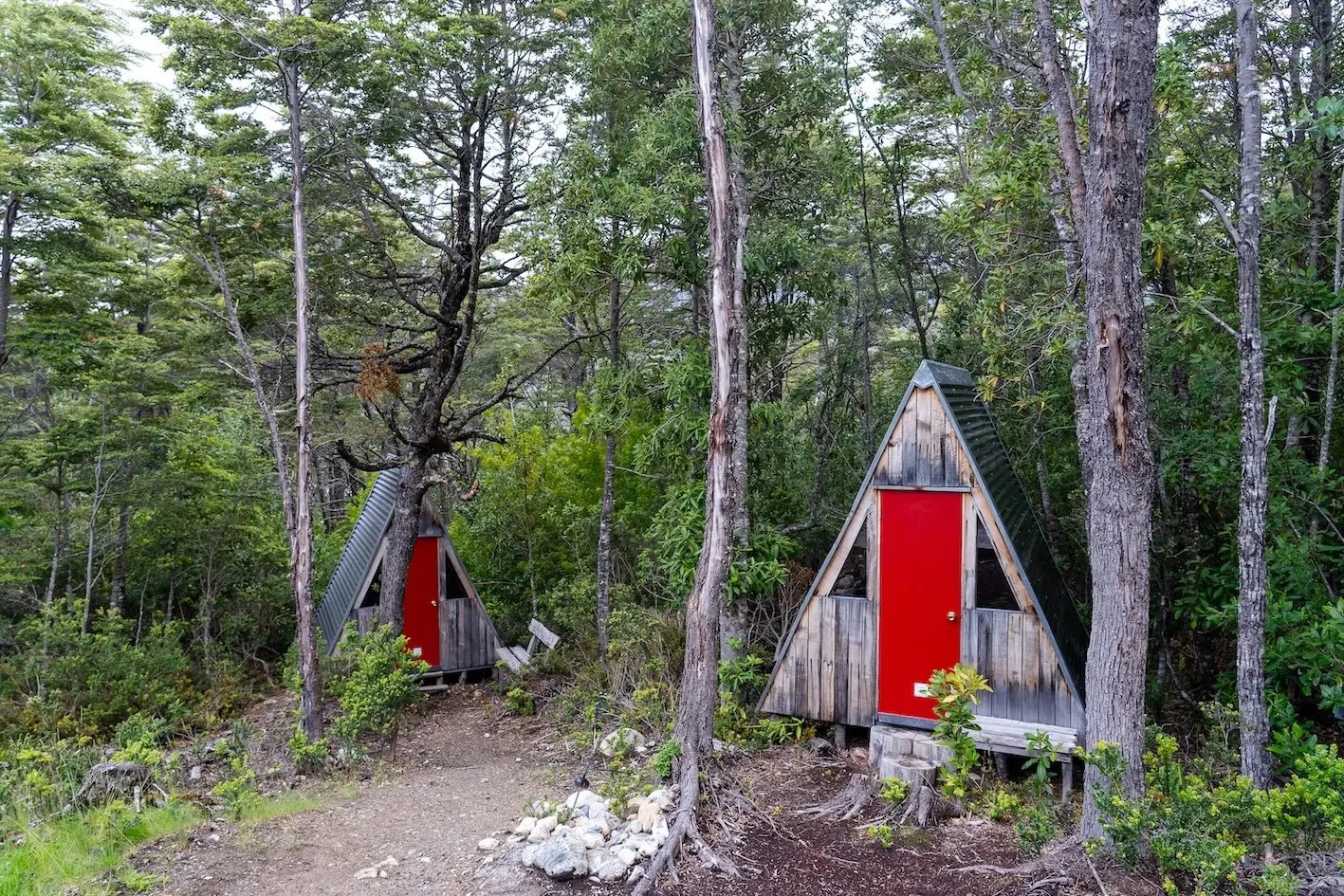
Our first overnight stay was in these triangle houses. There is a bed on each side, so a maximum of two people in each house
Day 2: Brush Lake to Serrano Village
The next day, we woke up to a big breakfast with bread, avocado, cheese, ham, some sweets, oats, warm coffee, and milk. It was great! I didn't expect so many breakfast options, to be honest. Then it was time to prepare for day 2: leaving Brush Lake Camp towards the Serrano area, marking the end of the Brush Variant of the trek.
Our shoes were more or less dry after one night beside the fire, and after some packing, we were ready to leave. We had two options: go to the shore of the lake where we got picked up the day before, and start from there: 22 km in total. Or, take the boat (additional cost) more or less halfway, avoiding some of the very wet areas and hills. We opted for the last option.
After about 20 minutes of a boat ride through the marshland, we got off the boat. As there was no pier, we had to step into the water and cross a wetland, leaving our shoes wet from the start. Then we walked beside the Serrano River before entering a beautiful forest, mainly populated by the nothofagus tree ñirre, a type of tree different from the cypress and coigüe trees we had walked beside on day 1.
This part was about 11 km, mostly flat and easy.
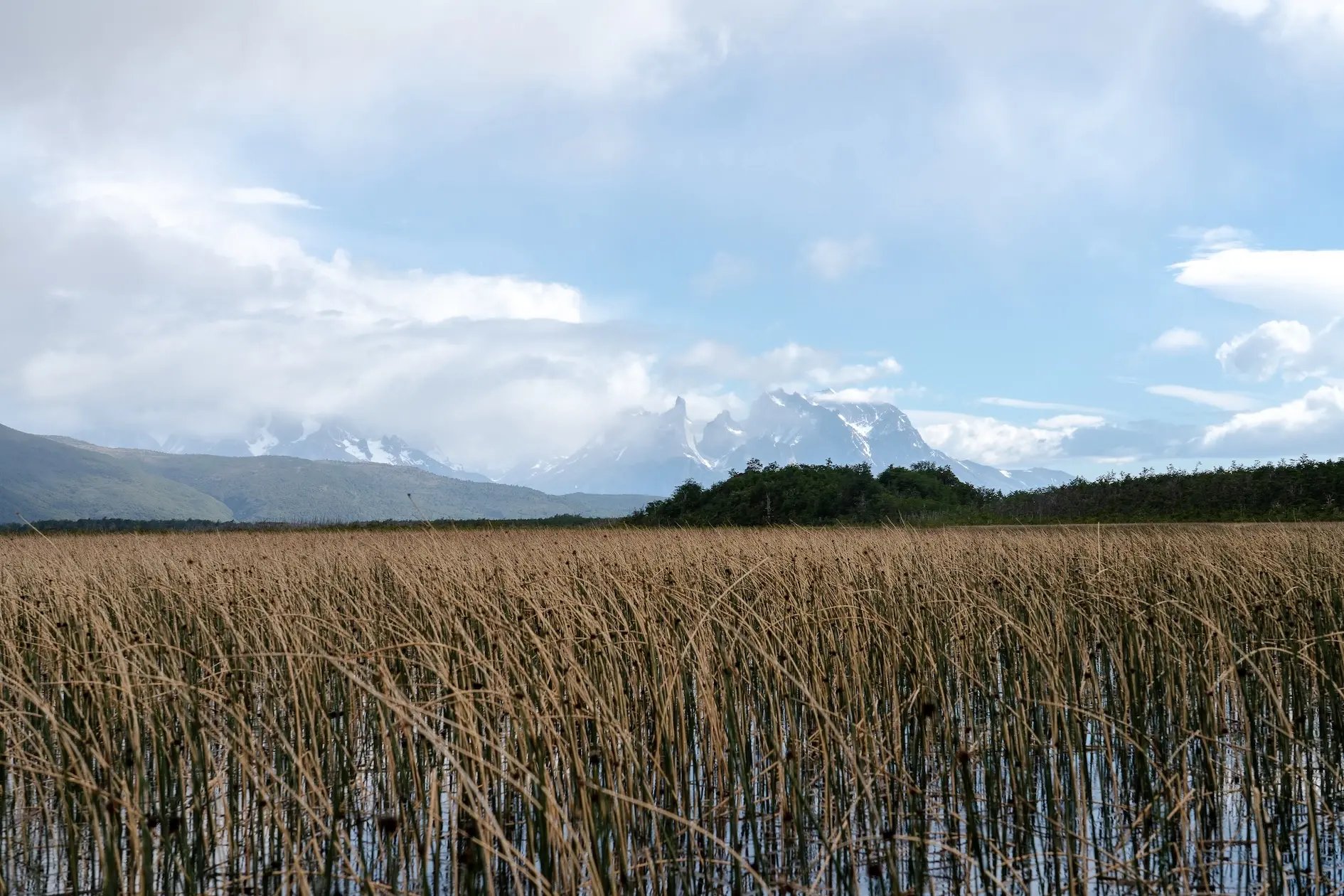
This was the view from the boat as we approached the Serrano area: in the background, you can see the Paine Massif
We had a lunch stop on the way to enjoy our sandwiches and snacks, then continued to Serrano Village, where we would spend one night at one of the coziest hotels in the area. We got a well-deserved shower, then met up for dinner, where we could choose between traditional dishes with a glass of wine or a pisco sour. This would be my last night together with the group.
The following morning, after breakfast, they will take a van to the Grey area, the west side of the national park, to take the ferry and start hiking the classic W trek from West to East, ending their last night at EcoCamp Patagonia.
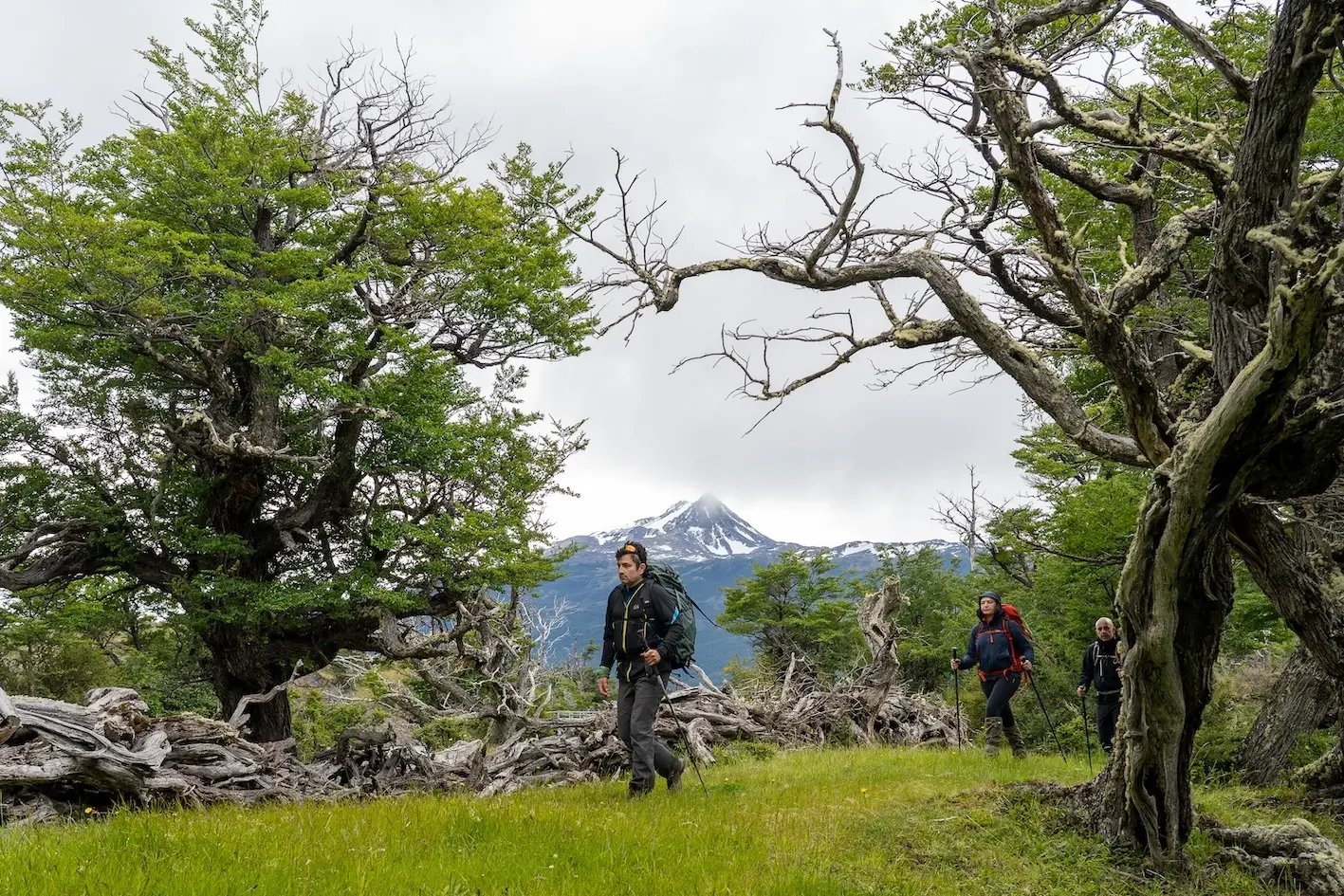
Day 2: hiking through ñirre forest with Mount Donoso in the background
The difference between the Brush area and Torres del Paine
The Brush Variant takes place in an environment different from where you will do the W trek inside Torres del Paine National Park. This area of the Bernardo O´Higgins National Park is considered cold-temperate, with frequent precipitation and heavy cloud cover. This means the environment here is wetter, with vegetation adapted to cold, humid conditions: a montane evergreen beech forest (Nothofagus coigüe) and peat bogs. It is very green, and you will see some species of trees you won’t see doing the W trek, like the mañío (Chilean plum yew), canelo (Winter’s bark), tineo (Chilean laurel), and Patagonian cypress.
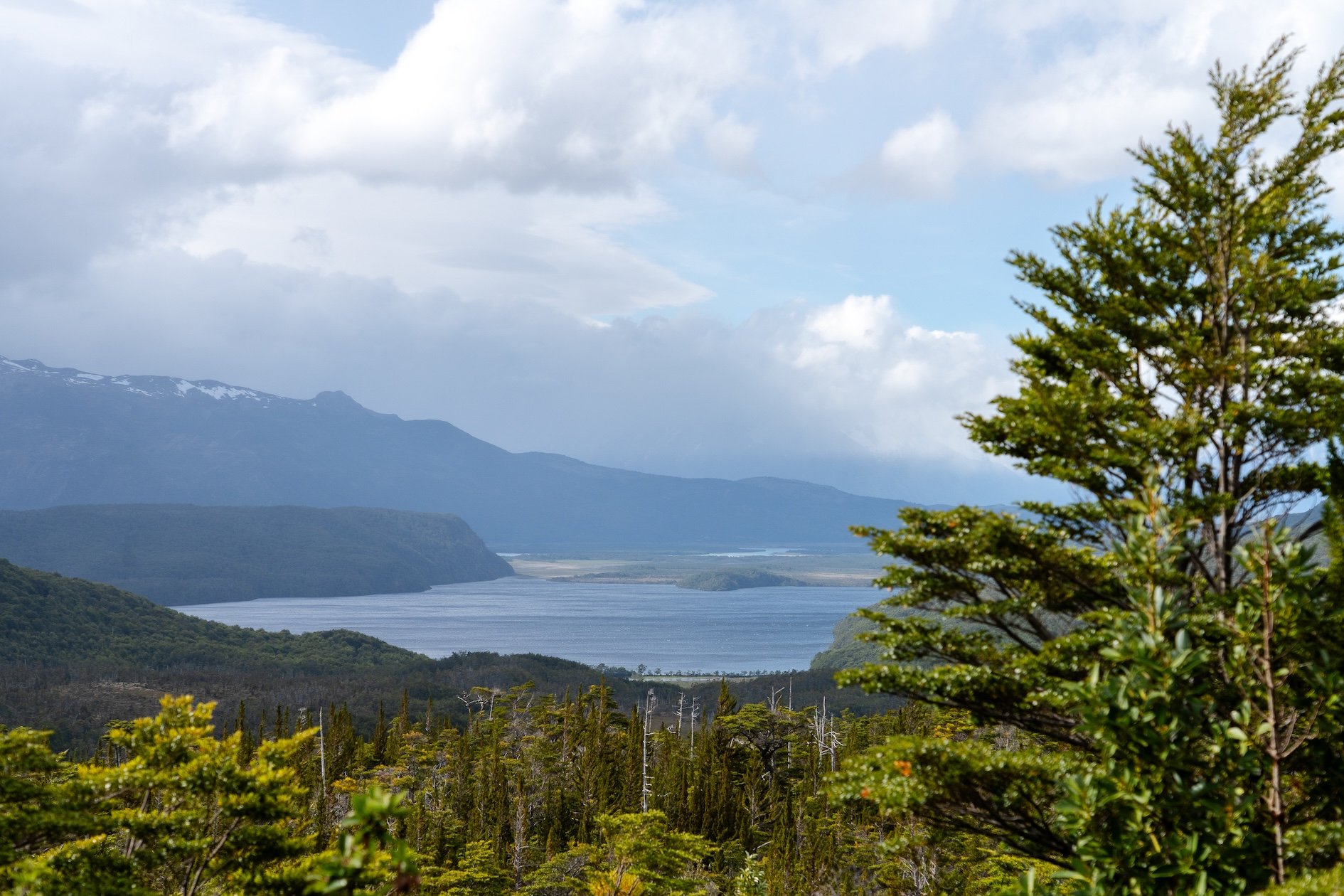
This area is more wild; the trails used to be horse trails, and because the forests are dense, you'll have to cross fallen trees. The peat bog is a type of wetland that accumulates peat - particularly decomposed plant material - over thousands of years. A peat bog plays an important role in carbon storage. Peatlands store more carbon than all the world’s forests combined, despite covering only ~3% of the Earth's land surface. For you, as a hiker, it means walking on a giant, wet sponge. As they contain water, and the area around the peat bog is very wet, there is a big chance of getting the feet wet.
The area is very green due to its high annual precipitation, greener than most areas in the park where you will be walking the W trek afterwards. The west side is generally greener as it borders the Southern Patagonian icefield, an area with colder temperatures and more rain, compared to the East side of the park, which is dominated by dry Patagonian steppes.
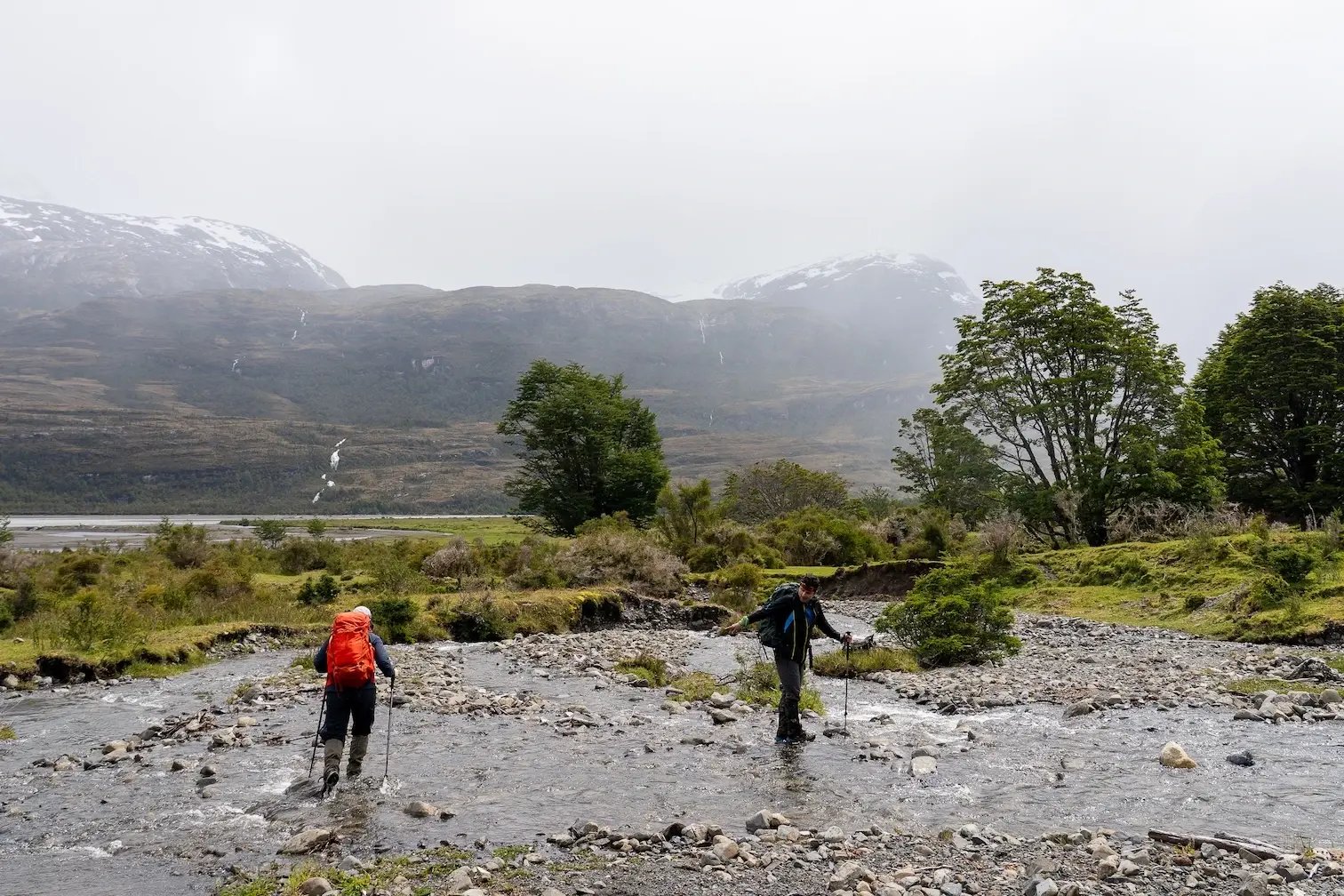
What I loved about the Brush area
Personally, I loved the Brush area. I was prepared for the worst kind of weather and getting wet, but the weather turned out better than what the forecast said. What I liked about the hike was the variety of vegetation: different types of flowers, bushes, and trees.
Especially the Patagonian cypress for me was something special as I haven´t seen this kind of tree inside the national park, Torres del Paine, as they thrive in a very wet climate, typically 2-5,000 mm of annual rain, and are therefore more common to see close to fjordlands and coastal Patagonia, and not inside Torres del Paine, an area with less precipitation.
Furthermore, there was no one else on the trail until we arrived at Serrano Village. I appreciate being able to hike in nature without anyone else; I believe it's a great luxury these days, when most national parks are highly visited during the high season. I did the hike in early December, when Torres del Paine National Park is at its peak.
It is a hike that requires both physical and mental preparation, as the weather can be rainy, windy, and cold, even in summer, in both Bernardo O'Higgins and Torres del Paine. You will be hiking all day, 6-9 hours, on uneven terrain: rocks, uphills, downhills, tree roots to cross, etc., which require more attention and slower walking. In distance, it mightn't sound like too much, but weather and terrain make the difference.
The difference between the traditional W Trek program and the W Trek + Brush Variant
The traditional W trek starts on day 2. You will have one day to check in at the hotel, and the next day you will start the hike from the EcoCamp Patagonia area, walking from the East side to the West side of the park. Then you will return to EcoCamp, and on day 5, you will do the base of the towers to finish the W trek. Then, on day 6, you will explore other parts of the national park: Sarmiento and further East, visiting the blue lagoon. These areas are good for wildlife spotting, and the Blue Lagoon gives you another perspective of the three granite towers.
You can get an overview of all our W trek programs in our blogpost What's the Difference Between our W trekking programs?
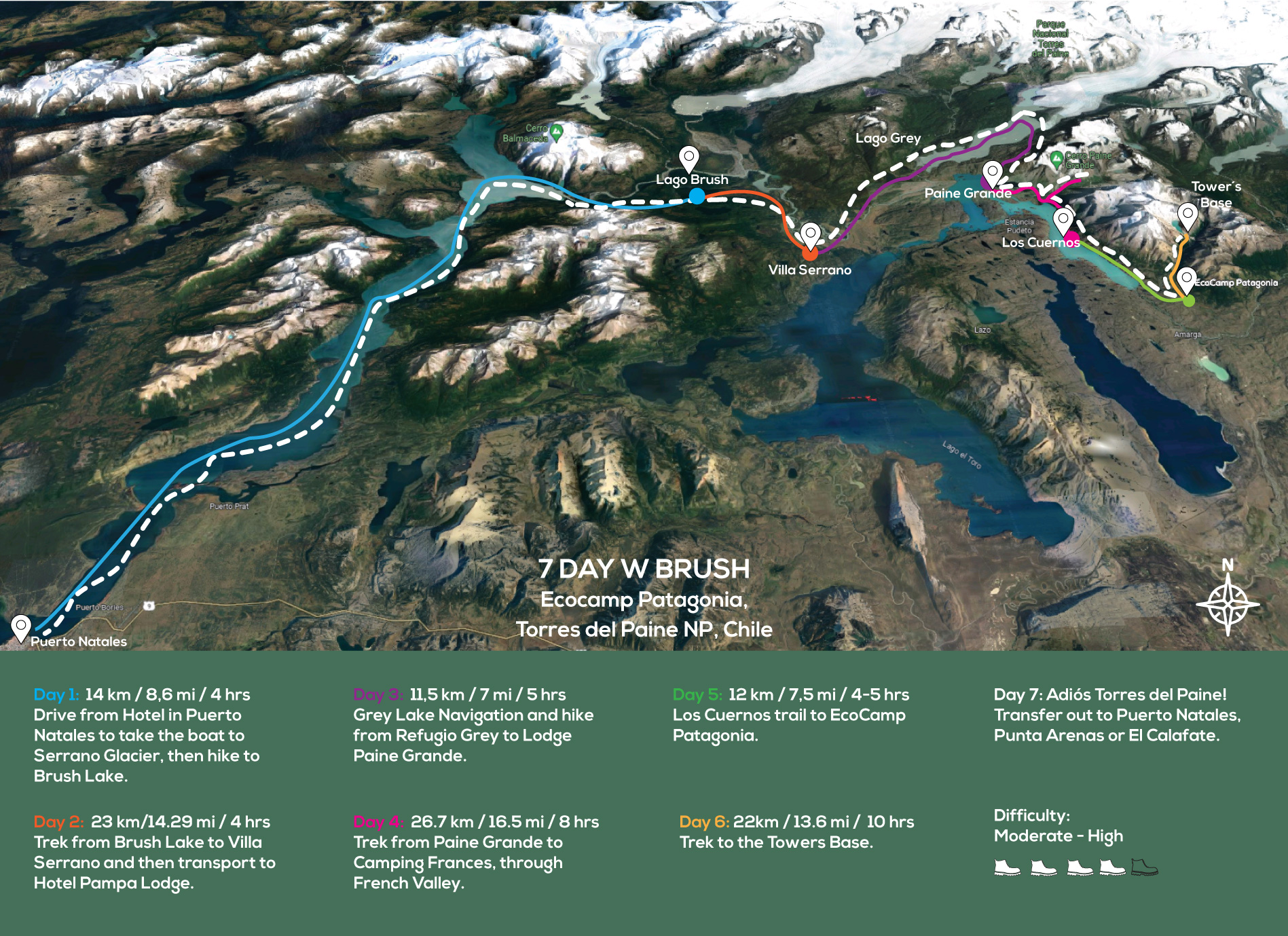
For the W trek Brush Variant, you start out on day 1 from Puerto Natales, sailing into the national park, Bernardo O´Higgins, and walking in the Brush area for 2 days. When starting the W trek on day 3, you will begin on the West side, walking towards the East side, where EcoCamp is located.
On day 6, you will do the Base of the Towers as the last activity. You can see more information and the maps by clicking the blog post mentioned above.
If you’re unsure which program best fits you, our sales team is ready to assist you. Start planning your adventure.